Pipeline deterioration is unavoidable in industrial environments. Corrosion, vibration fatigue, mechanical impact, and pressure fluctuations gradually weaken pipe walls. Traditionally, damaged sections were removed and replaced, or repaired through welding. Today, many facilities are adopting composite wrap technology as a structural reinforcement solution.
Rather than replacing the pipe, composite systems restore strength externally - extending service life while minimizing downtime.
Understanding the Structural Problem
When a pipeline wall loses thickness due to corrosion or cracking, two critical risks emerge:
Reduced pressure containment capacity
Progressive crack propagation
If untreated, localized damage can develop into full structural failure.
A composite wrap does not simply "cover" the defect. It redistributes stress around the weakened area and restores load-bearing capacity.
What Is a Composite Wrap System?
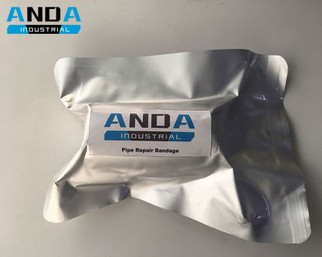
A composite wrap is typically made from high-strength reinforcing fibers (fiberglass or carbon fabric) combined with a reactive resin system. Once activated and applied around the pipe, it cures into a rigid composite sleeve.
This external sleeve functions as a structural reinforcement layer that:
Shares internal pressure load
Restricts crack expansion
Reduces hoop stress concentration
Protects against further corrosion
Unlike temporary pipe repair tape, a properly engineered composite wrap is designed to contribute to structural integrity.
The Engineering Principle Behind Composite Reinforcement
To understand how composite wrap technology works, it helps to examine stress distribution in a pressurized pipe.
Under internal pressure, a pipe experiences:
Hoop stress (circumferential stress)
Axial stress (longitudinal stress)
When wall thickness is reduced, hoop stress increases in the damaged zone. Composite reinforcement adds circumferential strength externally, effectively compensating for lost metal thickness.
Once cured, the composite wrap:
Bonds to the pipe surface
Transfers load between pipe and composite layer
Forms a pressure-resistant external shell
This load-sharing mechanism is the core reason composite pipe repair systems are effective.
Step-by-Step Reinforcement Process
Although procedures may vary depending on specification, a typical composite wrap installation involves:
1. Surface Preparation
The damaged pipe area is cleaned and roughened to ensure proper adhesion.
2. Defect Filling (if required)
Epoxy fillers or steel putty are used to restore surface profile.
3. Wrap Application
The resin-activated composite wrap is tightly applied around the pipe, extending beyond the damaged section.
4. Curing
The resin system polymerizes, forming a hardened composite layer within minutes.
Proper tension during wrapping is critical. The reinforcement effect depends on controlled compression and sufficient thickness.
Composite Wrap vs Traditional Repair Methods
From a mechanical standpoint, welding restores metal continuity. However, welding introduces:
Heat-affected zones
Residual stress
Risk of distortion
Requirement for system shutdown
Composite wrap technology avoids thermal stress entirely. It is a cold-applied system that does not alter the base metal structure.
For facilities where shutdown is costly or hazardous, composite reinforcement provides a practical alternative.
Where Composite Wrap Is Most Effective
Composite reinforcement is commonly applied in:
Corroded industrial water pipelines
Mining slurry transport systems
Oil & gas processing lines
Cooling water circuits
Offshore infrastructure
Chemical process plants
It is particularly useful when:
Wall loss is moderate
Cracks are stable
Pressure levels are within design limits
Replacement is economically undesirable
Engineering evaluation is recommended for critical or high-pressure applications.
Corrosion Protection Benefits
In addition to structural reinforcement, composite wrap systems act as corrosion protection layers.
The cured composite material:
Seals the surface from moisture
Reduces oxygen exposure
Resists chemical splash
Prevents further wall thinning
This dual function - reinforcement plus corrosion isolation - is one of the reasons composite wrap technology has gained acceptance in maintenance strategies.
Pressure and Temperature Considerations
The performance of a composite wrap depends on:
Resin formulation
Fiber orientation
Number of wrap layers
Installation quality
Industrial-grade composite pipe repair systems commonly operate across a broad temperature range and can withstand moderate industrial pressures when correctly specified.
Engineers should always verify:
Pressure rating
Operating temperature
Chemical compatibility
Required wrap thickness
Long-Term Performance Expectations
When properly engineered and installed, composite wrap systems can provide long-term reinforcement for damaged pipelines.
Key factors influencing durability include:
Surface preparation quality
Environmental exposure
Mechanical vibration
Installation tension control
Routine inspection remains part of responsible asset management, but many facilities report extended service life compared to untreated corrosion damage.
Strategic Value for Maintenance Planning
Composite wrap technology is increasingly integrated into preventative maintenance programs rather than used only for emergency response.
For maintenance engineers, this approach offers:
Reduced downtime
Lower lifecycle cost
Extended asset usability
Improved operational continuity
Instead of replacing aging pipelines prematurely, facilities can reinforce selectively and manage capital expenditure more effectively.
Final Perspective
Composite wrap technology represents a structural reinforcement method grounded in material science and stress redistribution principles. It is not a temporary patch, nor is it a universal substitute for replacement. When applied within engineering limits, it offers a practical and efficient way to restore pipeline integrity.
For maintenance teams evaluating reinforcement options, understanding how composite wrap systems share load and prevent crack propagation is essential to making informed decisions.