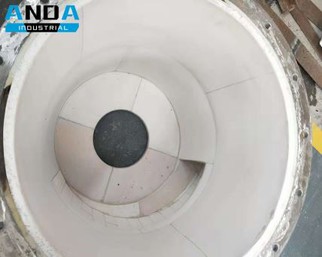
In large-scale mineral processing, coal power generation, and heavy chemical plants, the slurry pipeline network serves as the critical circulation system of the entire operation. Millions of tons of abrasive materials-such as gold tailings, iron ore concentrates, bottom ash, and corrosive mineral slurries-are continuously pumped under high pressure daily. Under these relentless operating conditions, conventional carbon steel or rubber-lined piping systems often experience rapid wall thinning and unexpected ruptures.
For maintenance engineers and procurement directors, these piping failures present an expensive challenge. Beyond the direct cost of replacing hardware, emergency pipeline repairs cause unscheduled plant shutdowns that can cost tens of thousands of dollars per hour in lost production.
To break this cycle of high maintenance costs, forward-thinking plant operators are modernizing their transport infrastructure by specifying advanced industrial ceramic lined pipe linings as their engineering standard.
The Hidden Financial Drain of Conventional Piping
In high-throughput industrial plants, the real cost of a slurry pipeline failure is rarely limited to the invoice price of a new steel spool piece. Instead, it is governed by Total Cost of Ownership (TCO) and Unscheduled Downtime Costs.
When a standard steel pipe fails prematurely due to hydro-abrasive erosion, operators face a series of compounding expenses:
Emergency Labor Costs: Diverting specialized site maintenance crews away from planned optimization tasks to perform emergency pipe welding and rigging.
Environmental Remediation: Cleaning up high-volume slurry spills, which can trigger safety hazards, environmental penalties, and strict regulatory oversight.
Lost Tonnage Yield: A complete halt in upstream processing circuits because a critical tailings line is offline, resulting in immediate revenue loss.
Traditional hardfacing alloys, polyurethane, and rubber coatings provide only temporary relief in high-velocity slurry lines (>4 m/s). They lack the necessary molecular hardness to resist continuous particle impingement and sliding abrasion over long operational cycles.
Material Engineering: How Advanced Ceramics Prevent Material Loss
The superior durability of a premium ceramic lined pipe network is rooted in advanced material science. While standard metals rely on a ductile structure that is easily grooved and cut by abrasive silica or quartz particles, technical ceramics utilize high-density alpha-alumina (Al2O3).
Sintered at temperatures exceeding 1700℃, engineered alumina develops an exceptionally tight ionic and covalent molecular bond. This structure achieves a Mohs hardness of 9.0, which is surpassed only by diamond. Because the abrasive particles suspended in the slurry cannot scratch or deform the ceramic surface, the rate of material erosion drops significantly.
Comparative Engineering Analysis
| Performance Metric | Carbon Steel (Q235) | High-Chromium Cast Iron | Shandong Anda Alumina Ceramic (Al2O3≥92%) |
| Mohs Hardness | 4.0 - 5.0 | 6.0 - 6.5 | 9.0 (Industrial Limit) |
| Microscopic Structure | Metallic grain boundaries | Alloy carbides in matrix | Dense, interlocking sintered alpha-crystals |
| Acid/Alkali Corrosion | Highly vulnerable | Moderately vulnerable | Excellent (Chemically inert) |
| Average Equipment Wear Life | 1.0 (Baseline) | 2.5 - 3.0× Base | 10 - 20× Base (Depending on velocity) |
By integrating high-purity industrial ceramic lined pipe linings into straight spools and directional elbows, plants can extend the operational life of their piping assets by 3 to 5 times compared to hardened steel alloys.
To review full laboratory test data on erosion rates under different slurry impact angles and fluid velocities, explore our comprehensive technical whitepaper: Ultimate Guide to Alumina Ceramic Pipe Liner for Mining Wear Protection.
Aligning Pipeline Reliability with Scheduled Maintenance
The primary operational benefit of upgrading to a ceramic-lined layout is the ability to shift from reactive emergency repairs to predictive, scheduled maintenance.
Because engineered ceramics resist hydro-abrasive wear so reliably, engineering firms can accurately calculate the wear life cycle of critical line segments. This predictability allows site managers to schedule pipeline inspections and drop-in replacements to coincide perfectly with planned, plant-wide annual or semi-annual maintenance turnarounds. This alignment eliminates unplanned stoppages, helping plants achieve up to a 70% reduction in unplanned pipeline downtime.
Furthermore, the ultra-smooth internal surface of a monolithic ceramic tube or precisely aligned trapezoidal tiles reduces internal fluid friction. This lower flow resistance reduces pressure drops across the pipeline network, lowering the power consumption of slurry pumps and decreasing overall plant energy costs.
To explore the full range of custom shapes, dimensional drawings, and material specifications available for high-wear industrial applications, browse our dedicated technical ceramic product portfolio.
Mitigating Supply Chain Risk with Verified OEM Capabilities
For EPC project managers and procurement executives overseeing cross-border industrial projects, reducing maintenance costs also requires a reliable, precision-engineered supply chain. Specifying a wear-resistant lining is only effective if the components are manufactured to exact dimensional tolerances, ensuring perfect drop-in fitment during field installation.
Engineered Solutions by Shandong Anda Industrial Co., Ltd.
Operating from a 10,000-square-meter manufacturing facility in Zibo, Shandong Province-the heart of China's industrial ceramic manufacturing sector-Shandong Anda Industrial Co., Ltd. combines 15 years of heavy-industry export experience with rigorous quality management frameworks (ISO 9001).
Our team of 6 specialized material technicians and 60 skilled production specialists custom-manufactures wear-resistant ceramic components designed to match your site's specific CAD drawings and operating parameters. Whether your process requires monolithic ceramic sleeves for fine slurry transport or engineered trapezoidal tiles for large-diameter tailings lines, Anda delivers verified wear protection that eliminates premature field failures.
Engineering Assessment: Don't let predictable steel piping failures inflate your plant's operating costs and disrupt production targets. Contact our technical sales division today to schedule a comprehensive wear-life assessment and receive a custom-tailored ceramic lining proposal for your operation.