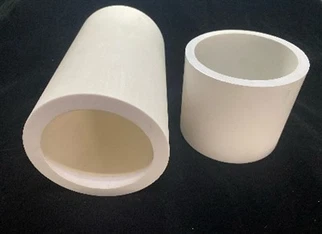
How to Extend Aluminum Titanate Tube Life: Maintenance, Handling, and Thermal Strategies for LPDC Foundries
In high-volume aluminum foundries, thermal insulation and non-wetting performance are critical for maintaining continuous casting cycles. Aluminum Titanate Tube components-widely utilized as riser tubes, sprue bushings, and dosing nozzles-play a vital role in preventing molten metal solidification and reducing heat loss. However, operational field data indicates that improper mechanical handling and rapid preheating cycles reduce the average service life of refractory tubes by up to 35%, leading to unscheduled furnace shutdowns and elevated replacement costs.
As foundries push toward higher automation and tighter operating margins, understanding How to Extend Aluminum Titanate Tube Life has become an essential engineering priority. By mastering thermal shock mitigation, mechanical alignment, and chemical maintenance, foundry operators can dramatically lower their total cost of ownership in low pressure die casting (LPDC) systems.
Material Characteristics: Understanding Aluminum Titanate (Al₂TiO₅)
Aluminum titanate is synthesized through the solid-state reaction of alumina (AL2O3) and titania (TiO2) at elevated temperatures. Its defining metallurgical feature is an anisotropic microcracked crystal structure, which provides an exceptionally low coefficient of thermal expansion (approx 1.5 times ). This microcrack network allows the material to absorb severe thermal shocks without catastrophic failure.
However, this same microcracked lattice gives aluminum titanate lower flexural strength compared to dense monolithic technical ceramics such as silicon nitride. Consequently, extending its operational lifespan requires minimizing external mechanical stresses during installation and daily production routines.
4 Proven Strategies to Extend Aluminum Titanate Tube Life
1. Implement Controlled Preheating Protocols
Thermal shock resistance does not mean thermal shock immunity. Subjecting a cold Aluminum Titanate Tube directly to700℃ molten aluminum creates steep localized thermal gradients between the inner and outer walls. Always preheat the tube gradually to at least 400℃-500℃ prior to immersion into the holding furnace. This minimizes microstructural stress and prevents surface micro-fractures from propagating into structural cracks.
2. Optimize Mechanical Alignment and Clamping Torque
Because aluminum titanate has lower mechanical toughness, physical impact and uneven mechanical pressure are the leading causes of premature failure. Ensure that the casting stalk tube is perfectly aligned vertically with the furnace lid and die inlet. Apply calibrated torque wrenches when securing flange clamps to distribute mechanical load evenly across the mounting rim, avoiding localized pinch points.
3. Prevent Slag Accumulation through Non-Wetting Care
While aluminum titanate natively repels liquid aluminum alloys, dross, oxides, and flux residues can mechanically adhere to the outer wall near the melt line over prolonged exposure. Avoid using aggressive steel scraper tools or hammers to knock off dross, as impact forces easily fracture the ceramic body. Instead, use specialized soft ceramic care tools during hot maintenance windows while the slag remains pliable.
4. Upgrade Critical Failure Zones with Monolithic Ceramics
In heavy-duty LPDC environments where high clamping pressure or aggressive mechanical vibration is unavoidable, foundries often transition critical high-stress melt channels from aluminum titanate to reaction-bonded or gas-tight silicon nitride riser tube assemblies. Combining aluminum titanate sprue bushings with a monolithic silicon nitride ceramic riser tube creates an optimized hybrid layout that balances thermal insulation with high mechanical rigidity.
Comparative Performance: Aluminum Titanate vs. Silicon Nitride (Si₃N₄)
Selecting the right material matrix for your low pressure die casting setup depends on balancing insulation demands against mechanical toughness requirements:
| Engineering Property | Aluminum Titanate Tube | Silicon Nitride (Si₃N₄) Riser Tube | Operational Impact on LPDC |
|---|---|---|---|
| Thermal Insulation | Superior (approx 1.5--2.0 W/m·K) | Moderate (approx 1.5-2.0 W/m·K) | Aluminum titanate reduces heat loss and prevents gate freezing. |
| Flexural Strength | Low (30--50 MPa) | High (> 600 MPa) | Silicon nitride resists heavy vibration, impact, and high clamping loads. |
| Molten Al Non-Wetting | Outstanding | Outstanding | Both matrices eliminate iron pick-up and dross adhesion. |
| Primary Application | Sprue Bushings, Dosing Tubes, Riser Tubes | High-Pressure Riser Tubes, Stalk Tubes | Matching material choice to stress level maximizes overall component life. |
For a detailed breakdown of chemical composition, grain boundary physics, and wear dynamics under continuous molten aluminum flow, review our technical guide on Material analysis of Aluminum Casting Riser tubes.


Complementary Ceramic Integration for Maximum Cell Lifespan
Maximizing furnace efficiency requires a complete, systemic approach to refractory protection throughout the melt zone:
- Thermocouple Sheath Protection: Enclosing thermal sensors within a gas-tight thermocouple protection tube or thermocouple sheath tube prevents alloy attack, ensuring precise holding temperature control that protects all refractory components from thermal overheating.
- Precision Sprue Bushings & Nozzles: Utilizing high-purity aluminum titanate sprue bushings ensures clean release at the mold entry, preventing alloy tearing and gate buildup during automated part extraction.
Engineering Field Tip (EEAT Guideline): Establishing a standardized daily maintenance checklist that includes gradual preheating verification, flange torque auditing, and soft-tool dross cleaning extends the operational life of an Aluminum Titanate Tube by 30% to 50%, directly cutting annual component consumption in high-volume wheel and structural casting lines.
Shandong Anda Industrial: Engineered Ceramic Solutions for Global Foundries
At Shandong Anda Industrial Co., Ltd., we bring over 15 years of specialized international B2B export experience to the global non-ferrous casting industry. Situated in Zibo, Shandong Province-China's premier technical ceramics manufacturing hub-our 10,000㎡ state-of-the-art facility manufactures high-precision structural ceramic components engineered for extreme thermal environments.
Our complete foundry portfolio includes high-density Aluminum Titanate Tube components, durable silicon nitride riser tubes, thermal-shock resistant thermocouple protection sheaths, and custom sprue bushings. Supported by our team of 6 core technical engineers, we strictly oversee every production step from raw material formulation to final precision machining, delivering components that meet the rigorous standards of global Tier-1 automotive and industrial suppliers.
Ready to extend component service life and lower your foundry scrap rates? Contact our technical sales team today to share your technical specifications, request custom engineering CAD reviews, and receive competitive volume pricing.