


In modern mining operations, tailings filtration has become an essential process for environmental protection, water recycling, and efficient tailings management. As more mines move toward dry stacking and greener production, the choice of filtration equipment directly affects plant performance and operating costs.
This article introduces the main tailings filtration methods, compares the advantages of different filtration systems, and explains why vacuum ceramic filters are becoming the preferred choice for tailings dewatering.
1. Gravity Sedimentation – Basic but Limited
Gravity sedimentation is the earliest and simplest form of tailings dewatering. It relies on the natural settling of solid particles under gravity, and is usually performed with a thickener.
Advantages: simple structure, low energy consumption.
Disadvantages: limited solid content; underflow concentration typically only 40–60%, which cannot meet dry stacking requirements.
Application: suitable for pre-concentration before fine filtration.
2. Vacuum Filtration – Efficient and Continuous
Vacuum filtration removes water under negative pressure. The slurry passes through a porous medium, and the filtrate is drawn away by a vacuum system.
Among all vacuum filters, the vacuum ceramic filter is the most advanced and widely used in tailings treatment.
Key equipment:
Vacuum ceramic filter
Vacuum disc filter
Working medium: ceramic filter plate, made from microporous ceramics with excellent corrosion and wear resistance.
Advantages:
High filtration accuracy and stable performance
Low moisture content (usually below 15%)
Fully automatic and continuous operation
Low maintenance and long service life
Typical applications: copper, iron, lead-zinc, and gold tailings with fine particle size.
3. Pressure Filtration – High Dryness, Batch Operation
Pressure filtration uses high hydraulic pressure to squeeze water out of the tailings through filter cloths or filter plates.
Main equipment: plate and frame filter press, membrane filter press.
Advantages: can achieve very low moisture content (10–20%), ideal for dry stacking.
Disadvantages: intermittent operation, higher labor demand, frequent cloth replacement.
Application: suitable for coarse or mixed-grain tailings, or plants requiring extremely dry filter cakes.
4. Centrifugal Filtration – Fast Separation for Medium Grains
Centrifugal filtration relies on high-speed rotation to generate strong centrifugal forces that separate liquid from solids.
Main equipment: centrifuge.
Advantages: rapid processing and compact design.
Disadvantages: high energy consumption, less suitable for very fine tailings.
Application: mainly used in coal preparation plants and non-metallic mineral processing.
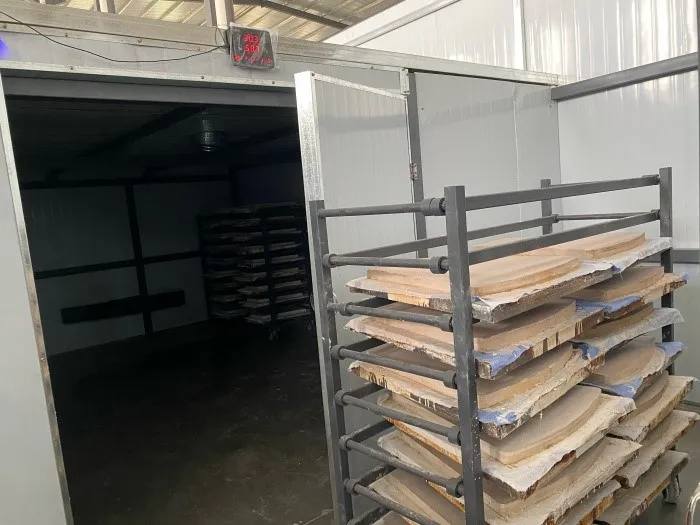
Our factory & quipment



5. Comparison of Filtration Methods
| Method | Typical Equipment | Moisture in Discharge | Automation | Suitable Tailings | Features |
|---|---|---|---|---|---|
| Gravity Sedimentation | Thickener | 40–60% | Medium | All sizes | Simple and low cost |
| Vacuum Filtration | Vacuum Ceramic Filter | 10–18% | High | Fine tailings | Continuous, energy-efficient |
| Pressure Filtration | Filter Press | 10–20% | Medium | Coarse to fine | Very dry cake, higher maintenance |
| Centrifugal Filtration | Centrifuge | 20–35% | Medium | Medium-grain | Fast, high energy use |
6. The Future: Vacuum Ceramic Filter Leads Tailings Dewatering
With global emphasis on sustainable mining, vacuum ceramic filters have become the preferred solution for tailings dewatering and dry stacking.
Compared with traditional filter presses, ceramic filters provide:
Continuous and automatic operation
Consistent filtration performance
Energy savings up to 30%
Longer service life of the ceramic filter plate (often over 2 years)
Minimal maintenance requirements
For modern concentrators seeking a balance between cost, efficiency, and environmental compliance, the vacuum ceramic filter represents a mature and reliable filtration technology.
Please check the video of ANDA ceramic fiter plates :
Backflush Testing of CC-144 Ceramic Filter Plate


