In the high-stakes sectors of mineral processing, power generation, and heavy bulk handling, material conveyance is a continuous battle against friction and kinetic energy. Slurry pipelines transporting tailings, ore concentrates, or bottom ash are subjected to severe hydro-abrasive wear daily. For decades, carbon steel or high-manganese alloy pipes were the global engineering defaults due to their low initial procurement costs and ease of welding.
However, as modern beneficiation plants increase throughput and fluid velocities to optimize yield, traditional metallurgy is reaching its physical limits.
To lower high maintenance costs and eliminate unscheduled plant downtime, pipeline design engineers and Engineering, Procurement, and Construction (EPC) managers are increasingly demanding quantitative material comparisons. This data analysis examines the wear-life performance of a premium composite ceramic lined pipe network versus conventional steel piping under severe industrial operating conditions.
The Root Cause of Pipe Failure: Erosion-Corrosion Synergy
To understand the performance gap between metals and technical ceramics, site maintenance engineers must analyze the micro-mechanics of material loss. In a standard carbon steel pipe transporting slurry, wear occurs through a destructive combination of physical erosion and chemical corrosion:
Ductile metals like carbon steel possess relatively low mineral hardness. When hard particles such as quartz or metal oxides impinge upon the pipe wall, they cut micro-grooves into the surface. At the same time, oxygenated transport water or acidic chemical reagents react with the exposed metal, accelerating corrosion. The fluid flow instantly strips away this weakened, oxidized layer, exposing fresh metal to immediate mechanical erosion.
In high-velocity lines (>4 m/s), this continuous cycle causes rapid wall thinning and early pipeline failure, often requiring emergency maintenance within months.
Comparative Data Analysis: Hardness and Wear Life Cycle Factors
Advanced industrial ceramics solve this problem by introducing an entirely different molecular structure. Unlike steel, which relies on metallic bonds that are vulnerable to shearing, high-purity alumina (Al2O3) utilizes exceptionally strong ionic and covalent bonds.
The table below provides comparative engineering data analyzing standard carbon steel, high-chromium cast iron, and premium sintered alumina ceramic:
| Material Property & Performance Metric | Standard Carbon Steel (Q235) | High-Chromium Cast Iron (Cr15Mo3) | Shandong Anda Alumina Ceramic (Al2O3≥92%) |
| Mohs Hardness | 4.0 - 5.0 | 6.0 - 6.5 | 9.0 (Surpassed only by diamond) |
| Rockwell Hardness (HRA) | $\le 50$ HRA | 60 - 65 HRA | $\ge 85$ HRA |
| Density ($g/cm^3$) | 7.85 | 7.70 | 3.60 - 3.65 (Lowers structural weight) |
| Chemical Inertness | Low (Corrodes easily) | Moderate | Excellent (Resists strong acids/alkalis) |
| Relative Wear Life Factor | 1.0 (Baseline) | 2.5 - 3.0× Base |
10 - 20× Longer Lifespan |
Analyzing the Data
Because engineered alumina achieves a Mohs hardness of 9.0, it is harder than the silica, iron ore, and gold tailings particles suspended in the slurry. Since the abrasive media cannot scratch or cut the ceramic surface, material loss is dramatically reduced.
Furthermore, alumina is an advanced technical ceramic that is entirely oxidized during sintering. This means it is chemically inert and will not rust or react with acidic mine water or aggressive processing chemicals, completely eliminating the erosion-corrosion synergy that destroys steel.
To review full laboratory test data on erosion rates under varying impingement angles and particle velocity profiles, explore our comprehensive technical resource: Ultimate Guide to Alumina Ceramic Pipe Liner for Mining Wear Protection.
System-Wide Field Performance: Straights vs. High-Impact Bends
In an operational slurry transport network, wear is never distributed uniformly. Straight pipeline runs experience sliding abrasion, while directional changes-such as elbows, bends, and tees-bear the brunt of high-angle particle impingement.
When a slurry flow hits an alloy bend, the centrifugal forces concentrate the solids against the outer radius, leading to rapid localized erosion. For system-wide protection, engineering firms use targeted lining configurations:
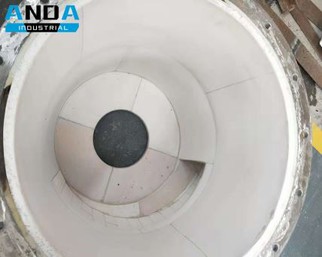
Pneumatic & High-Velocity Lines: Installing seamless, monolithic ceramic tubes inside steel casings creates an optimal abrasion resistant pipe system. The seamless internal bore eliminates joint erosion and reduces hydraulic friction, lowering the energy required by slurry pumps.
Chutes, Hoppers, and Large Bends: In high-impact bulk material handling areas where raw ore drops from heights, operators integrate heavy-duty ceramic wear liners-often vulcanized with a rubber matrix backing-to absorb impact energy while preventing structural wear.
To view detailed engineering specifications, dimensional drawings, and custom sizing options for these specialized wear mitigation components, browse our dedicated technical ceramic product portfolio.
Financial Return: Achieving Lower TCO for Global Operators
For Procurement Managers and EPC Project Directors, replacing steel with an engineered ceramic-lined pipeline network is a strategic financial investment. While the upfront capital expenditure for ceramic-composite systems is higher than bare carbon steel, the long-term savings are significant:
70% Reduction in Unplanned Downtime: Extending the operational life of critical pipeline sections by 3 to 5 times allows mines to align pipeline maintenance with scheduled plant-wide shutdowns.
Minimized Field Maintenance Costs: Eliminating regular pipeline rotations, patch welding, and emergency replacements frees up site maintenance crews for other critical tasks.
Enhanced Operational Safety: Preventing high-pressure slurry blowouts protects on-site personnel and eliminates environmental contamination risks and subsequent regulatory fines.
Precision Engineering from Zibo, China
Operating from a 10,000-square-meter manufacturing facility in Zibo, Shandong Province-the heart of industrial ceramic engineering-Shandong Anda Industrial Co., Ltd. combines 15 years of heavy-industry export experience with strict quality control. Our team of 6 dedicated material technicians custom-manufactures wear-resistant ceramic components tailored precisely to your site's specific CAD designs and operating parameters.
Request a Technical Evaluation: Don't let predictable steel piping failures compromise your plant's production targets. Contact our engineering team today to schedule a comprehensive wear-life assessment and receive a custom-tailored ceramic lining proposal.