How Alumina Ceramic Pipe Lining Improves Both Abrasion and Corrosion Resistance
ZIBO, CHINA - In modern mineral beneficiation, chemical processing, and heavy bulk handling, pipeline reliability is directly tied to a plant's profitability. Recent global extraction processing data reveals an expensive operational bottleneck: over 65% of premature piping breaches in high-tonnage copper, gold, and iron ore circuits are driven by the simultaneous attack of mechanical erosion and chemical oxidation. When abrasive tailings are suspended in low-pH process water and pumped under high systemic pressure, traditional carbon steel or basic alloy piping spools thin rapidly, often wearing through within months. To eliminate these early failures, Engineering, Procurement, and Construction (EPC) managers are updating their piping specifications, driving a rapid global transition toward engineered Alumina Ceramic Pipe networks to secure continuous plant availability.
The Destructive Synergy inside Severe Slurry Lines
In high-throughput mineral processing operations, a heavy-duty slurry pipeline system is subject to extreme fluid-particle dynamics. When hard silica or quartz aggregates are pumped through a raw line at velocities exceeding 4 m/s, they strip away the metal's passive oxide film. Once exposed, the fresh metallic substrate reacts instantly with acidic mine water or copper leaching reagents, leading to rapid electrochemical corrosion. This chemical oxidation weakens the metal's grain boundaries, making it even more vulnerable to the next wave of sliding abrasion.
This relentless cycle causes rapid material loss, unexpected pipe ruptures, and hazardous material spills that complicate workplace safety and increase maintenance costs. Traditional rubber linings or polyurethane coatings offer insufficient resistance in these severe circuits; under high shear stress, acidic chemicals migrate through polymer matrices, attacking the underlying carbon steel adhesive layer and causing catastrophic lining dislodgement. To break this cycle of reactive repairs, industry procurement specifications are demanding comprehensive **Corrosion Protection** systems designed to completely isolate raw steel from aggressive chemical media.
Material Science: Why Engineered Ceramics Resist Acid and Impingement
The exceptional durability of a premium **ceramic pipe** network is rooted in advanced material chemistry. Unlike ductile metals that rely on easily sheared metallic bonds, high-purity alumina (Al2O3 92%) features exceptionally strong ionic and covalent bonds. Compacted using advanced isostatic pressing and sintered at temperatures exceeding 1700°C, the resulting technical ceramic elements form an incredibly dense alpha-crystalline matrix.
Because the aluminum oxide is already fully oxidized during the high-temperature manufacturing process, it remains completely chemically inert. It does not react with concentrated mineral acids, alkaline processing matrices, or aggressive chemical collectors. This property eliminates the underlying chemical corrosion that commonly destroys traditional hardfacing plates, allowing the pipe to maintain long-term structural integrity where metal alloys dissolve
Engineering Principle: Achieving true mining wear resistance requires high surface hardness alongside chemical neutrality. Sintered alumina achieves a Mohs hardness of 9.0-surpassed only by diamond. Because the silica and aggregate minerals found in mining tailings cannot scratch the dense ceramic face, structural material loss drops to near zero.
To review full laboratory test data on erosion-corrosion wear rates across varying pH levels and slurry impingement angles, read our comprehensive industry whitepaper: Ultimate Guide to Alumina Ceramic Pipe Liner for Mining Wear Protection.
Strategic Asset Configuration: Modular Sizing and Fastening
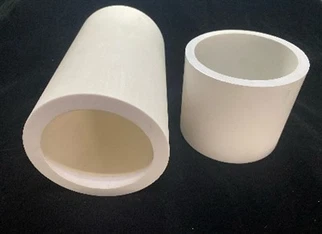
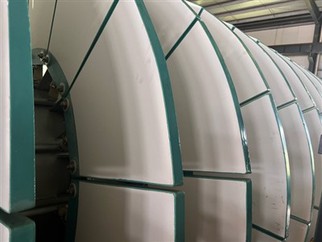
Optimizing pipeline asset lifecycles requires deploying specific technical component layouts tailored to the localized velocity profiles of your processing plant. For straight, high-pressure slurry lines, implementing monolithic, seamless ceramic tubes provides an optimal solution by eliminating internal joint erosion. In contrast, for large-diameter processing lines, complicated distribution manifolds, and sloped tailings launders, engineers utilize pre-engineered trapezoidal tile arrays to create a continuous protective sleeve.
By upgrading critical lines with a high-performance Alumina Ceramic Pipe architecture, operations prevent premature material failures and significantly extend system lifespans. To view full structural dimensional drawings, thickness configurations, and material certifications available for aggressive industrial transport lines, browse our dedicated technical ceramic product portfolio.
| Material Specification Matrix | Standard Carbon Steel (Q235) | High-Chromium Cast Iron | Anda High-Purity Alumina Ceramic |
|---|---|---|---|
| Rockwell Hardness (HRA) | ≤ 50 HRA | 60 - 65 HRA | ≥ 85 HRA |
| Chemical Acid Resistance (pH 1-6) | Poor (Rapid Dissolution) | Moderate (Localized Pitting) | Excellent (Chemically Inert) |
| Erosion-Corrosion Synergy Risk | Critical Asset Vulnerability | High Failure Potential | Zero Operational Risk |
| Average Wear Life Cycle Factor | 1.0 (Baseline Reference) | 2.5 - 3.0× Base | 10 - 20× Extended Lifespan |
Quantifying the Operational Lifecycle Return
Upgrading abrasive and chemically aggressive material conveyance circuits to an engineered **Wear Protection** platform yields clear, long-term financial advantages for global operators:
- F (Features): High-density alpha-alumina crystals provide exceptional surface hardness (85 HRA) and complete chemical neutrality across extreme pH profiles.
- A (Advantages): Completely blocks the destructive synergy of erosion-corrosion, maintaining a smooth internal surface that reduces hydraulic friction and pump power costs.
- B (Benefits): Delivers up to a 70% reduction in unplanned maintenance downtime, shielding beneficiation circuits from high emergency repair bills and unexpected production halts.
- E (Evidence): Backed by a 10,000-square-meter manufacturing facility in Zibo, China, and 15 years of dedicated heavy-industry export experience, Shandong Anda Industrial Co., Ltd. custom-manufactures wear components to strict international quality standards (ISO 9001).
Consult with Our Wear Protection Engineering Division
Don't let predictable metal piping failures and chemical corrosion inflate your plant's operating costs and disrupt processing targets. Our team of 6 specialized material technicians and 60 skilled production specialists custom-manufactures high-performance industrial ceramic wear components tailored precisely to your site's specific CAD drawings and chemical operating profiles.
Secure Long-Term Pipeline System Reliability
Contact China's leading industrial ceramic wear engineering firm today. Custom sizing, advanced ZTA material upgrades, and detailed technical proposals are available to support your operational targets.