For global metallurgical plants and high-tonnage mines, optimizing solid-liquid separation is a critical economic driver. In 2026, severe water scarcity and strict regulations on tailings management have made efficient dewatering essential. A single percentage point fluctuation in filter cake moisture can impact shipping logistics or increase thermal drying expenditures by $120,000 to $350,000 annually per processing line.
In heavy-duty mining filtration, maximizing the throughput of a disc filter system depends on managing several interconnected variables. When process engineers experience sudden capacity drops or high cake moisture, the root causes usually trace back to specific chemical, physical, and mechanical factors.
RECOVERY BOTTLENECK
Slurry Fluctuations & Fine Particle Fouling
↓
CORE INFLUENCE VECTORS
↓
| Slurry Properties | Operational Setup | Filter Media Design |
| Slime Concentration | Vacuum Level (-0.098MPa) | Capillary Synergy |
| Viscosity & pH | Rotational Speed | Water-Casting Channels |
For an in-depth exploration of system mechanics, maintenance workflows, and hardware integration, see our comprehensive resource: The Complete Guide to Ceramic Filter Plates in Mining Filtration: Engineering, Optimization, and Global Trends.


1. Slurry Properties: Particle Size Distribution and Rheology
The physical and chemical composition of the incoming mineral slurry directly affects filtration rates.
The Problem of Ultra-Fine Mineral Slimes
An accumulation of sub-20 micron ultra-fine particles, often called "mineral slimes" or clay fractions, significantly reduces permeability. When the ratio of these ultra-fines exceeds 25% to 30% of the total feed solids, they form a dense, tightly packed boundary layer on the filter media. This restricts fluid flow and increases final cake moisture.
Slurry Viscosity and pH Values
Chemical conditions in flotation circuits also impact filtration performance. High slurry viscosity increases resistance within the capillary network. Additionally, fluctuations in pH affect the zeta potential of the mineral particles, which can lead to premature particle agglomeration or dispersion, impacting how evenly the cake forms across the filter sectors.
2. Mechanical Parameters: Vacuum Control and Disc Kinetics
Operational settings must be balanced against the physical characteristics of the slurry to achieve optimal performance.
CAKE FORMATION VS. DEWATERING CYCLE TIME
◄─── Cake Formation Zone ───►◄─────── Drying & Dewatering Zone ───────►
Slurry Immersion Deep Vacuum Extraction
Capillary Draw Begins Fluid Channels Purged
◄─────────────────────── 1 Full Disc Rotation ────────────────────────►
Optimizing the Vacuum Matrix
Maintaining a stable vacuum pressure is essential for efficient moisture removal. Industrial systems generally require a steady negative pressure between -0.09 -0.098MPa. Any drop in vacuum due to worn seals or component degradation reduces the driving force across the filter media, leading to thinner cakes and higher moisture retention.
Balancing Rotational Speed (RPM)
Adjusting the rotation speed of the disc involves a trade-off between total throughput and cake dryness:
Higher RPM: Increases the volume of material processed per hour but shortens the drying cycle, which can result in wetter filter cakes.
Lower RPM: Extends the dewatering period, yielding a drier cake, but reduces total plant throughput.
3. Filter Media Selection: Pore Engineering and Drainage Architecture
The structural design of the filter media determines the long-term efficiency and stability of the system.
In demanding applications like mining water treatment, traditional textiles often struggle with flexible pore structures that can stretch and bind under continuous operation. This performance gap is detailed in our comparative analysis: Ceramic Filter Plates vs Filter Cloth: Which Is Better for Mining Filtration?.
Modern mining systems rely on high-grade ceramic filter plates featuring an asymmetric microporous layer (0.5 -2.0μm) bonded to a structural substrate. This rigid design provides distinct operational advantages:
Capillary Barrier Efficiency: The small, uniform pore structure utilizes natural capillary forces to draw water through while preventing air bypass. This helps maintain high vacuum levels with minimal energy usage.
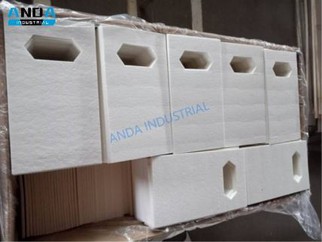
The Water Casting Advantage: Advanced manufacturing techniques, like the Water Casting Process developed within Zibo's industrial ceramic hub, create an integrated, single-body sintered structure. This method yields an interconnected internal drainage network where 80% of the entire plate volume consists of active fluid channels. This high openness lowers flow resistance and allows for high-capacity fluid removal during production.
System Compatibility: These engineered plates are designed to meet exact international standards, allowing for seamless integration as high-performance aftermarket parts on major equipment fleets such as Roxia and CEC.
4. Operational Maintenance and Online Regeneration
Over extended production campaigns, mineral scaling, residual flotation frothers, and fine particle entrapment can gradually reduce a filter plate's permeability. Managing this requires a reliable, multi-tiered regeneration protocol:
Continuous Ultrasonic Cleaning: Integrating high-frequency ultrasonic transducers into the slurry basin helps break up surface deposits and loose particle cakes during operation.
Automated Hydraulic Backwashing: Directing clean filtrate back through the internal channels under pressure during each rotation helps clear the micropores from the inside out.
Targeted Chemical Cleansing: Periodically introducing mild acid or specialized surfactant washes dissolves mineral scaling and removes chemical residues, restoring initial fluid flow rates.
5. Strategic Value for Processing Plants
Optimizing these operational variables allows mining operations to improve both processing efficiency and environmental compliance. Selecting durable components like water-cast ceramic filtration plates helps ensure stable throughput, low cake moisture, and efficient water recovery for industrial reuse.
To review detailed geometric drawings, material specs (Alumina vs. Silicon Carbide), or compatibility data for upgrading your Roxia or CEC systems, visit our technical product catalog:
👉 ANDA Industrial Vacuum Ceramic Disc Filter Plate Solutions