As aluminum casting standards continue to rise, material selection inside the low pressure die casting (LPDC) system has become increasingly critical. Among all advanced materials used in modern die casting environments, silicon nitride ceramic (Si₃N₄ ceramic) stands out as one of the most reliable and high-performance technical solutions.
Understanding the silicon nitride material properties in LPDC applications helps foundries improve melt stability, reduce contamination, and extend equipment service life.
Why Material Performance Matters in Low Pressure Die Casting
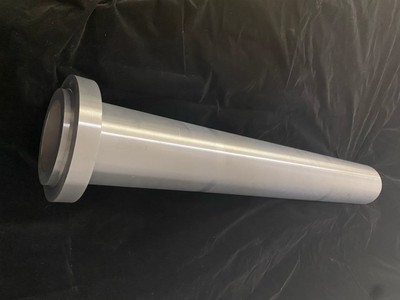
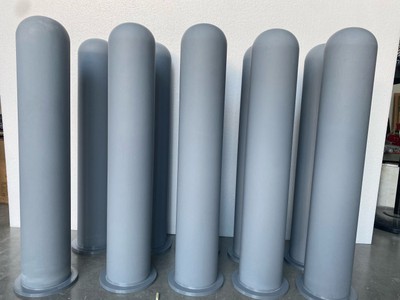
In a typical low pressure die casting process, molten aluminum is transported from the furnace to the mold through a ceramic tube, commonly known as a silicon nitride tube or riser tube.
This component must withstand:
Continuous exposure to molten aluminum
Thermal cycling
Pressure fluctuation
Mechanical stress
Corrosive environments
Traditional metal tubes often fail due to oxidation and erosion. Advanced technical ceramic materials are therefore replacing metallic components in modern die casting machines.
Key Silicon Nitride Properties in LPDC Systems
1️⃣ Excellent Corrosion Resistance
One of the most important silicon nitride properties is its resistance to molten aluminum attack.
Unlike metal tubes, Si₃N₄ ceramic has very low wettability to molten aluminum, preventing chemical reaction and oxide formation. This reduces melt contamination and improves casting cleanliness in both low pressure die casting and pressure die casting systems.
2️⃣ High Mechanical Strength
Silicon nitride material exhibits high flexural strength and fracture toughness compared with most ceramic materials.
Its elongated β-phase grain structure creates a self-reinforcing microstructure, giving it superior crack resistance. This makes the silicon nitride tube highly reliable under pressure conditions in LPDC furnaces.
3️⃣ Thermal Shock Resistance
During ceramic casting and aluminum melting cycles, rapid temperature changes are common.
Because silicon nitride ceramic has low thermal expansion and strong thermal shock stability, it resists cracking during repeated heating and cooling. This property is essential for:
Silicon nitride heater components
Silicon nitride insulator parts
Thermal stability directly affects equipment uptime and maintenance intervals.
4️⃣ Dimensional Stability and Insulation Performance
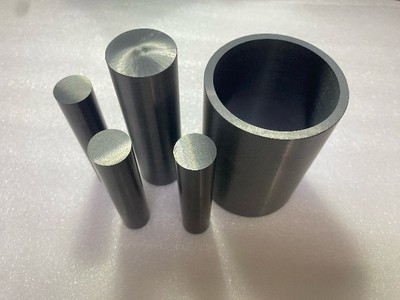
Silicon nitride also performs well as a silicon nitride insulator, maintaining structural integrity at high temperatures.
Compared to aluminium nitride ceramic, which is valued for its high thermal conductivity in electronic applications, silicon nitride focuses more on structural strength and molten metal resistance.
Both aluminium nitride and silicon nitride belong to advanced ceramic nitride families, but their application focus in casting environments differs significantly.
Comparison with Other Ceramic Materials
In aluminum casting systems, several advanced materials are used:
Aluminium nitride ceramic – high thermal conductivity applications
SiC ceramic / SiC tube – high hardness and wear resistance
Nitride-bonded silicon carbide – cost-performance balance
Silicon nitride ceramic – high structural stability in molten aluminum
While SiC ceramic performs well in wear resistance, its oxidation resistance in molten aluminum environments is generally lower than high-grade silicon nitride material.
This is why silicon nitride tube solutions are preferred in demanding LPDC operations where corrosion protection and longevity are priorities.
Silicon Nitride in Different Casting Processes
Although most commonly used in low pressure die casting, silicon nitride components are also applied in:
Pressure die casting auxiliary systems
Ceramic casting equipment upgrades
Furnace insulation structures
Heating systems using silicon nitride heater elements
As casting tolerances tighten, advanced ceramic silicon materials are increasingly integrated into modern die casting machines.
Engineering Value in LPDC Upgrades
Upgrading to silicon nitride ceramic components provides:
Reduced downtime
Improved melt cleanliness
Lower inclusion rate
Extended service life
Higher casting yield
When evaluating total operational cost, many foundries recognize that advanced technical ceramic solutions outperform traditional metal alternatives.
In EV-related aluminum casting, where defect tolerance is minimal, the reliability of silicon nitride material becomes even more critical.
Conclusion
The success of modern LPDC systems depends not only on machine precision, but also on material science.
Understanding silicon nitride material properties - including corrosion resistance, thermal shock stability, mechanical strength, and insulation behavior - explains why silicon nitride ceramic has become a cornerstone material in advanced die casting applications.
As the aluminum casting industry continues upgrading equipment and process control, silicon nitride tubes and related ceramic components will remain essential to achieving long-term stability and high production efficiency.