


The rapid growth of the electric vehicle (EV) market is reshaping the global aluminum casting industry. As automakers accelerate lightweight design and structural integration, casting processes are being pushed to new performance standards.
One of the most significant upgrades driven by EV demand is the modernization of Low Pressure Die Casting (LPDC)systems - particularly the replacement of traditional metal components with advanced ceramic riser tubes.
Why EV Manufacturing Is Driving Casting Innovation
Electric vehicles require:
Lightweight structural components
High-strength aluminum alloys
Complex thin-wall geometries
Superior dimensional precision
Lower defect rates
Compared with conventional internal combustion vehicles, EV platforms rely heavily on aluminum parts for battery housings, suspension components, motor brackets, and lightweight chassis structures.
This shift has increased demand for:
Stable molten aluminum transfer
Cleaner melt conditions
Consistent pressure control
High-yield casting production
LPDC has therefore become one of the preferred casting processes for EV-related components.
LPDC Systems Under Higher Performance Pressure
In LPDC, molten aluminum is transferred from the furnace to the mold through a riser tube (stalk tube) under controlled air pressure.
Any instability in this tube directly impacts:
Melt cleanliness
Flow consistency
Porosity rate
Surface quality
Production uptime
Traditional cast iron riser tubes are increasingly unable to meet the stricter quality requirements of EV aluminum casting due to corrosion, oxidation, and dimensional instability.
This is where advanced ceramic riser tubes play a critical role.
Why Ceramic Riser Tubes Are Essential for EV Casting
Modern LPDC upgrades increasingly rely on three engineered ceramic materials:
Silicon nitride riser tube (Si₃N₄)
Aluminum titanate riser tube (Al₂TiO₅)
Nitride-bonded silicon carbide riser tube (Si₃N₄+SiC / NSiC)
Each material provides enhanced performance compared to metal tubes.
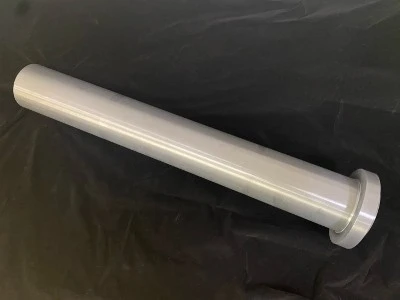
1️⃣ Silicon Nitride Riser Tube for High-End EV Casting
Silicon nitride ceramic offers:
Excellent corrosion resistance to molten aluminum
High mechanical strength
Strong thermal shock resistance
Long service life
For EV structural parts that demand extremely stable melt flow, the silicon nitride riser tube ensures reduced oxide contamination and improved casting integrity.
It is widely selected for high-volume automotive LPDC production lines.
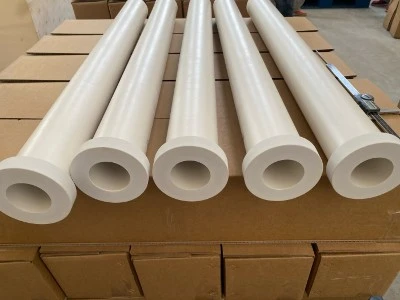
2️⃣ Aluminum Titanate Riser Tube for Thermal Stability
Aluminum titanate ceramic is known for:
Extremely low thermal expansion
Outstanding resistance to thermal shock
Good stability under repeated heating cycles
In EV casting environments with frequent temperature fluctuations, Al₂TiO₅ riser tubes provide reliable performance while maintaining cost efficiency.
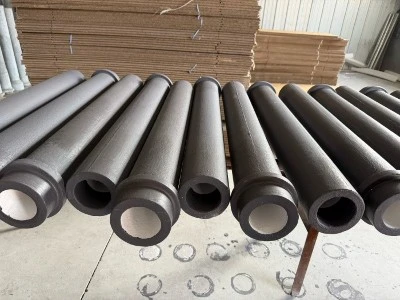
3️⃣ Nitride-Bonded Silicon Carbide (NSiC) for Balanced Performance
NSiC ceramic riser tubes combine:
The hardness of silicon carbide
The bonding strength of silicon nitride
Competitive cost structure
They are commonly used in LPDC systems where durability and budget control must be balanced.
EV Casting Quality Standards Are Increasing
EV aluminum casting emphasizes:
Reduced porosity
Higher density
Lower inclusion rate
Precise dimensional control
Upgrading from cast iron to ceramic riser tubes significantly reduces:
Molten aluminum contamination
Wall erosion
Melt turbulence
This directly improves casting yield and lowers scrap rates.
For high-value EV components, even small improvements in melt cleanliness can lead to major cost savings.
Beyond Riser Tubes: Complete Ceramic Upgrades
In addition to riser tubes, EV casting lines increasingly adopt:
Silicon nitride thermocouple protection tubes
Ceramic radiant tubes for furnace systems
Advanced ceramic insulation components
Together, these technical ceramic components form a more stable and contamination-resistant molten metal environment.
The Global LPDC Upgrade Trend
As EV production continues to expand globally, foundries are investing in:
Automated LPDC systems
Smart pressure control
High-efficiency furnace design
Advanced ceramic components
The replacement of metal riser tubes with silicon nitride and other advanced ceramic tubes is no longer experimental - it is becoming an industry standard.
Foundries that delay this upgrade may face:
Higher defect rates
Increased maintenance cost
Competitive disadvantages in EV supply chains
Conclusion
The growth of EV manufacturing is accelerating technological upgrades in aluminum casting.
At the center of this transformation is the LPDC system - and at the heart of LPDC performance is the riser tube.
Advanced ceramic riser tubes, including silicon nitride, aluminum titanate, and nitride-bonded silicon carbide, are enabling foundries to meet the higher precision, cleanliness, and efficiency requirements of modern EV casting.
As the EV market continues to expand, ceramic technology will remain a key foundation of casting innovation.


