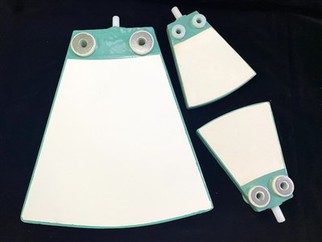
In modern industrial mineral processing, the processing of concentrates and the management of tailings present critical operational bottlenecks. As global environmental regulations tighten, the mining sector is rapidly transitioning from traditional wet tailings disposal to advanced zero-discharge water recycling and dry stacking management.
At the center of this technological paradigm shift is the industrial ceramic filter plate (also known as a ceramic filter plate or ceramic filters disc). This guide provides a deep engineering and commercial analysis of microporous ceramic dewatering technology, detailing how it outperforms traditional textile-based filter press options, and outlines the optimization vectors that heavy industry relies on to lower total operating expenditures (OPEX).
1. The Critical Role of Filtration in Modern Mining & Water Treatment
Solid-liquid separation in mineral processing is no longer just a simple step before logistics; it is an essential component of regulatory compliance, safety, and water security. Whether extracting copper, gold, iron ore, lead-zinc, or washing coal, processing plants require highly efficient filtration parts and performance parts to maintain continuous uptime.


Concentrate Filtration
Valuable mineral concentrates (e.g., copper chalcopyrite, gold-bearing pyrite, magnetite) must be dewatered to a predictable, low-moisture state to prevent transport liquefaction risks during maritime shipping and to avoid high penalty fees at metallurgical smelters.
Tailings Dewatering & Dry Stacking
Traditional upstream tailings dams pose severe long-term environmental liabilities, physical collapse risks, and high reclamation costs. By deploying high-capacity filtration solutions, mines convert liquid slurry into structurally stable, dry-scraped materials. This practice, known as dry tailings stacking, eliminates the need for massive tailing ponds, limits environmental footprints, and significantly mitigates risk.
Mining Water Treatment and Closed-Loop Systems
Water is a critical processing fluid in extraction metallurgy. In arid mining regions (such as Western Australia, the Atacama Desert in Chile, or Northern China), maximizing water recycling is key to operational continuity. High-performance water treatment systems utilize microporous ceramic elements to reclaim clean filtrate directly from thickener underflows, returning ultra-clear water back to the grinding and flotation circuits without requiring extensive secondary settlement ponds.
2. Technical Principles: The Physics of Capillary Dewatering
The exceptional performance of an alumina ceramic membrane filter plate lies in its utilization of interfacial fluid physics rather than brutal mechanical compression alone.
Microporous Ceramic Structure Filtration Mechanism
An advanced ceramic filter plate is engineered as an asymmetric composite structure consisting of two distinct sections:
The Membrane Functional Layer: A highly controlled, ultra-thin top layer with a uniform pore size matrix ranging strictly between0.5-2.0 um. This acts as the definitive surface filtration barrier, isolating sub-micron mineral slimes.
The Structural Base Layer: A highly permeable, thick ceramic substrate designed with larger macro-pores to ensure high physical structural integrity while offering near-zero hydrodynamic resistance to internal fluid flow.
Capillary Negative Pressure + Vacuum Filtration Principle
The system exploits the natural phenomena of capillary pressure in fine pores, mathematically described by the Young-Laplace equation:

Where:
Pc is the capillary pressure,
γis the fluid surface tension,
θ is the contact angle (wetting affinity),
r is the micro-pore radius.
When a hydrophilic alumina or silicon carbide plate is fully wetted by the mining slurry, the extremely small pore radius (r) generates an immense internal capillary force. When an industrial vacuum pump applies a negative pressure (typically-0.09 -0.098MPa)inside the plate, water molecules pass through the matrix with minimal resistance.


Crucially, because the capillary breakthrough pressure of the wetted pore is significantly higher than the applied vacuum pressure, air cannot penetrate the ceramic membrane. The pore channels remain completely sealed with liquid water. This absolute gas-barrier property prevents air bypass, drastically lowering energy use because the vacuum pump only moves extracted water rather than high volumes of free air.
Surface Membrane Filtration vs. Deep Bed Filtration
Traditional textile filtration media allow fine mineral particles to penetrate deep into the fabric weave, resulting in progressive particle blinding, reduced permeability, and cloth failure. In contrast, an alumina ceramic membrane filter plate utilizes true surface filtration. The micro-pores trap even the smallest sub-micron slimes on the outer boundary layer, forming a homogenous filter cake that releases smoothly during the discharge cycle.
Automated Backwashing and Regeneration Techniques
To counteract long-term surface fouling from scaling minerals or chemical frothers, the system integrates a reverse fluid cycle. As the rotary disc filter moves past the discharge scraper, an automated backwash system forces high-pressure filtrate or a mild acid solution from the inside out. This mechanism continuously clears the pore entries, restoring initial hydraulic permeability before the plate re-enters the slurry zone.


3. Breakthrough Manufacturing: The Power of the Water Casting Process
The operational lifespan and water-delivery efficiency of a ceramic plate depend heavily on its internal drainage configuration. Historically, plates manufactured via dry pressing or standard slip casting suffered from localized internal stresses or constricted internal paths, which reduced total fluid flow.

To resolve these issues, the advanced Water Casting Process was developed within Zibo's premier ceramic engineering cluster. This casting method focuses on an integrated, single-body molding and single-body sintering philosophy.
Key Industrial Advantages of the Water Casting Process:
Interconnected Network (80% Internal Volume): Unlike traditional linear drainage lines, water casting produces an intricate network of interconnected internal paths. Up to 80% of the entire plate body serves as an open drainage system. This design minimizes internal fluid friction and allows for rapid water removal.
Exceptional Structural Rigidity: By avoiding glued joints or secondary assemblies, single-body sintering eliminates the risk of internal delamination. The plate can withstand intense cyclic pressures as it moves between heavy vacuum suction and high-pressure backwashing.
Extended Wear Life: The uniform distribution of density achieved through water casting prevents localized wear spots, enabling the plates to handle highly abrasive copper, gold, or iron ore slurries over long campaigns.
4. Head-to-Head: Ceramic Filters vs. Legacy Technologies
To understand why international mining groups are replacing traditional equipment with ceramic filter options, engineers look closely at performance metrics across key dewatering systems.
| Performance Vector | Ceramic Vacuum Disc Filter | Recessed Chamber / Diaphragm Filter Press | Conventional Vacuum Disc Filter | High-Speed Dewatering Centrifuge |
| Operating Profile | Continuous, 24/7 automation | Batch system, cyclic downtime | Continuous operation | Continuous operation |
| Energy Consumption | Extremely Low (10%-20%of cloth systems) | High (requires high-power feed pumps & compressors) | Extremely High (massive air bypass requires large vacuum pumps) | High (mechanical energy required for high rotational speeds) |
| Filtrate Quality | Clear (< 20mg/L); bypasses secondary treatment | Variable; susceptible to cloth tears and fines bypass | Poor; high solids leakage requires thickener reprocessing | Clouded; poor capture of sub-40 micron fines |
| Cake Moisture | Low & Consistent (8% -12% typical) | Very Low (7%-10%under high pressure, but fluctuates) | High (>15% -18%, problematic for transport) | High when processing ultra-fine material |
| Filter Media Lifespan | Long-lasting (Typically 12 to 36+ months) | Short (Cloth breaks every few weeks) | Short (Frequent cloth binding and tearing) | Moderate (Metal screens require high-cost replacement) |
| Total OPEX Profile | Minimal (Low power draw, highly automated) | High (High labor costs, frequent cloth replacements) | High (Extreme energy consumption, high maintenance) | Very High (High rotational wear, specialized balance maintenance) |


5. Material Engineering: Alumina (Al2O3) vs. Silicon Carbide (SiC)
The choice of ceramic compound depends heavily on the chemical and physical characteristics of the processing slurry.

Alumina Ceramic Filter Plate
Alumina (Al2O3) remains the industrial standard for most mineral processing applications. Sintered at high temperatures, it offers excellent mechanical strength, exceptional face-wear resistance, and an optimal price-to-performance ratio for mid-tier to large-scale operations. It delivers reliable performance across typical pH ranges (pH 4 - 10) in iron, copper, and lead-zinc flotation plants.
Silicon Carbide Ceramic Plate (SiC)
For extreme environments, Silicon Carbide (SiC) represents a significant material upgrade. It features a Mohs hardness second only to diamond, making it highly resilient against sharp, coarse quartz tailings that can erode lesser ceramics. Furthermore, SiC is chemically inert across the entire
pH spectrum (pH 1-14), making it well-suited for acidic bio-leaching operations, gold cyanidation processes, or high-temperature metallurgical slurries.
Emerging Advanced Material Trends:
Sub-Micron Nano-Membranes: Developing thin-film surface layers with true nano-scale pores to block ultra-fine clay slimes and prevent pore blinding.
Anti-Fouling Additives: Integrating catalytic or highly hydrophobic compounds directly into the ceramic matrix to limit mineral scaling and reduce chemical cleaning frequencies.
Extended Life Targets: Moving beyond basic operational limits toward an expected service lifespan of over 3 to 5 years, even under high-tonnage mining conditions.
6. Global Equipment Compatibility & Fleet Integration
A key challenge for global maintenance managers when updating filtration systems is avoiding vendor lock-in from original equipment manufacturers (OEMs). Modern ceramic filter plates are engineered to strict international standards, ensuring seamless compatibility with leading vacuum disc filter brands.

High-quality aftermarket cycle spares and cycle parts can replace original parts on systems like Roxia and CEC without requiring retrofitting or structural modifications. They match original specifications for:
O-Ring and Flange Fits: Ensuring perfect structural sealing to prevent vacuum loss and maintain continuous $-0.098\,\text{MPa}$ operation.
Structural Anchor Points: Replicating precise bolt patterns and shoulder alignments to withstand high centrifugal and scrap-induced stresses during operation.
Backwash Pressure Distribution: Handling regular reverse hydraulic pressure spikes from automated cleaning cycles without structural degradation.
This cross-compatibility allows mines to optimize their supply chain by sourcing robust, high-performance aftermarket parts with shorter lead times and improved cost efficiencies.
This cross-compatibility allows mines to optimize their supply chain by sourcing robust, high-performance aftermarket parts with shorter lead times and improved cost efficiencies.
7. Strategic Outlook: The Era of Autonomous, Low-Energy Dewatering
Looking forward, several key structural shifts are driving the global mining industry toward advanced filtration systems:
Mandatory Dry Tailings Management: Governments worldwide are restricting wet tailings dams. The choice of dewatering technology determines a mine's regulatory viability. High-capacity ceramic disk filtration provides a reliable, continuous path to dry stacking compliance.
Autonomous Operational Control: Modern filtration installations use smart sensors to track cake thickness, filtrate turbidity, and backwash differential pressures in real-time. These metrics integrate directly into the plant's distributed control system (DCS) via automated algorithms, adjusting rotational speeds and cleaning cycles to match variations in the incoming slurry.
Scalable Fleet Capacity: Industrial capacity demands have scaled up significantly. Production facilities are expanding to meet this need; for example, the manufacturing center in Zibo is scaling up production capacity, including dedicated multi-kiln expansions for large-format 12# filter plates. This industrial scaling secures steady components sourcing for high-volume mining projects globally.
Our factory & quipment


8. Conclusion: Maximizing Mineral Processing Yields
Investing in high-performance filtration technology is key to improving processing efficiency and ensuring environmental compliance. Utilizing advanced manufacturing techniques like the Water Casting Process helps mining operations achieve dependable throughput, low cake moisture, and minimal energy consumption.
To see exact geometric dimensions, specialized material configurations, and engineering data sheets for upgrading your current Roxia or CEC systems, visit our dedicated product line page:
👉 ANDA Industrial Vacuum Ceramic Disc Filter Plate Solutions
Onsite Validation: Ceramic Filter Sectors Performance in Brazil
Real-world feedback from a major iron ore processing plant in Brazil:
- Perfect Flatness: Manufactured via our advanced Water Casting Process (one-piece molding) and Overall Sintering Process, ensuring tight dimensional tolerances, zero warping, and a seamless airtight fit.
- Outperforming Competition: The onsite side-by-side comparison clearly demonstrates ANDA's superior capillary action, delivering faster dewatering speed and lower filter cake moisture than alternative market brands.
*Engineered with high-density 92% Alumina/Artificial Corundum to maximize your plant uptime.