


ZIBO, CHINA - In high-capacity bulk material handling terminals, mining beneficiation plants, and heavy processing facilities, material transfer points face continuous mechanical degradation. Facilities conveying thousands of tons of sharp ores, metallurgical coal, clinker, and aggregate daily encounter rapid equipment degradation at transfer hoppers, chutes, and vibratory feeders. When traditional carbon steel or hardfaced alloy liners fail under this relentless stress, operations face severe consequences: unexpected downtime, hazardous material spills, and skyrocketing repair costs. To secure continuous tonnage throughput, asset managers and EPC engineers are upgrading their infrastructure with advanced 2-in-1 composite wear plate solutions.
Industry Trends: Overcoming Severe Abrasion and Impact Vulnerabilities
In high-tonnage mining circuits and port logistics, bulk conveyance systems endure two distinct destructive forces simultaneously: severe sliding abrasion and high-energy perpendicular impact. Traditional metallic liners fail because single-structure metals cannot effectively handle both stress mechanisms over extended operational cycles.
Standard hardfacing alloys may resist sliding wear, but their brittle nature makes them prone to surface chipping and cracking when hit by large ore blocks. Conversely, resilient rubber liners absorb impact energy effectively but wear away quickly under continuous high-velocity particulate flow. The ongoing struggle against localized plate wear has driven a strategic shift toward multi-layered composite engineering-specifically, 2-in-1 ceramic-rubber wear plates that integrate the surface hardness of technical ceramics with the shock-absorbing properties of elastic rubber.
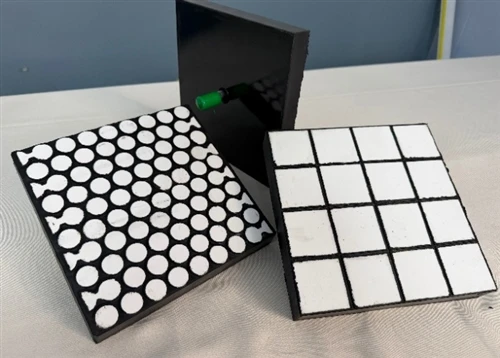
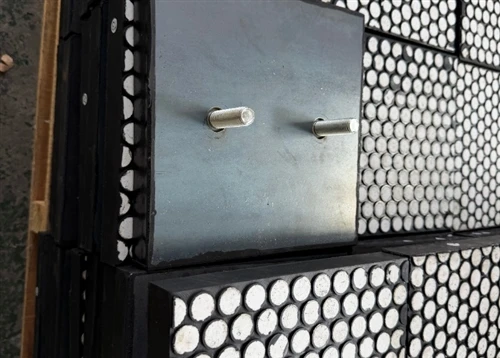

Technical Engineering: The Dual-Defense Mechanics of 2-in-1 Wear Plates
Engineering long-term equipment protection for heavy bulk transport requires dividing destructive mechanical forces at the material level:
- High-Purity Alumina Ceramic Surface Layer: The outer layer consists of high-density alpha-alumina (Al2O3-92%) or Zirconia-Toughened Alumina (ZTA) tiles. Sintered at temperatures exceeding 1700°C, this crystalline matrix achieves a mineral hardness of Mohs 9.0 (Rockwell hardness 85HRA). Sharp ore particles cannot gouge or scratch the ceramic face, reducing sliding abrasion to near zero.
- Viscoelastic Rubber Cushioning Matrix: The ceramic tiles are vulcanized directly into a high-resilience natural or synthetic rubber matrix. When heavy rocks strike the liner, the rubber deforms under compression, absorbing kinetic impact energy and preventing brittle fracture in the ceramic elements.
- Noise & Structural Vibration Damping: The elastomeric backing breaks the acoustic conductivity of the steel frame, dampening structural noise by 10 to 15 decibels while absorbing systemic vibrations that could otherwise loosen mechanical fasteners.
Engineering Principle: High-purity alumina ceramics are fully oxidized during high-temperature manufacturing, making them completely chemically inert. This provides comprehensive corrosion protection against acidic mine waters, recycled slurry streams, and aggressive flotation reagents.
For complete laboratory test data, fluid-particle erosion models, and dimensional blueprints for severe slurry and pipeline transfer zones, explore our comprehensive technical guide: Ultimate Guide to Alumina Ceramic Pipe Liner for Mining Wear Protection.
Material Engineering & Performance Metrics
Selecting an effective composite 2-in-1 wear plate setup requires matching the ceramic tile geometry and rubber shore hardness to your site's specific drop height, material block size, and flow velocity.
To inspect physical composition sheets, dimensional blueprints, and custom sizing options across our advanced materials, visit our dedicated technical ceramic product portfolio.
| Performance Metric | Standard Carbon Steel (Q235) | Hardfaced Chromium Carbide (CCO) | Anda 2-in-1 Ceramic Rubber Wear Plate |
|---|---|---|---|
| Surface Mineral Hardness | 4.0 - 5.0 Mohs | 6.5 - 7.0 Mohs | 9.0 Mohs (≥ 85 HRA) |
| Primary Wear Defense | Deforms under impact | Resists moderate sliding | Combined Extreme Hardness + Shock Absorption |
| Corrosion Protection (pH 1–14) | Poor (Rapid Oxidation) | Moderate (Alloy Cracking) | Excellent (Chemically Inert) |
| Service Life Lifecycle Factor | 1.0 (Baseline Reference) | 2.5 - 3.0× Base | 5 - 8× Extended Lifespan |
Quantifying Total Cost of Ownership (TCO) Returns
Upgrading bulk handling transfer points to 2-in-1 ceramic-rubber composite wear plates provides clear financial and operational advantages:
- F (Features): Ultra-hard alpha-alumina ceramic tiles (Al2O3-92%) vulcanized directly into a high-resilience elastomeric cushion layer.
- A (Advantages): Outlasts standard carbon steel and hardfaced alloy plates by 5 to 8 times, delivering unmatched mining wear resistance under combined sliding and impact loads.
- B (Benefits): Delivers up to a 70% reduction in unplanned maintenance downtime, protecting operations from emergency repair costs and lost production tonnage.
- E (Evidence): Supported by a 10,000-square-meter facility in Zibo, China, and 15 years of heavy-industry export experience, Shandong Anda Industrial Co., Ltd. manufactures composite wear solutions under strict ISO 9001 quality management standards.
Consult with Our Wear Protection Engineering Division
Prevent premature equipment wear and unscheduled maintenance shutdowns from impacting your plant's production targets. Our team of 6 specialized material technicians and 60 skilled production experts custom-engineers wear protection solutions tailored precisely to your site's CAD drawings and bulk material flow rates.
Secure Maximum System Reliability Today
Contact China's leading industrial ceramic wear engineering team. Custom sizing, ZTA material options, and comprehensive TCO evaluations are available upon request.


