1. Escalating Climate Volatility Exposes Marine Terminal Weak Points
Global bulk ports and coastal marine terminals are encountering unprecedented operational pressures driven by an increase in severe weather events, including torrential rainfall, storm surges, elevated atmospheric salinity, and extreme ambient temperature fluctuations. As high-capacity continuous ship unloaders (CSUs) and grab bucket unloaders race to turn around capesize and panamax vessels, transfer chutes are operating under punishing, compound stress environments.
While ship unloader transition chutes are designed to handle high-velocity bulk dry materials such as iron ore, coal, bauxite, and copper concentrates, extreme weather amplifies material stickiness and wet-abrasion dynamics. The combination of intense kinetic impact from moist, heavy ore and aggressive marine atmospheric corrosion is driving premature liner failure, unplanned terminal downtime, and escalating emergency maintenance costs.
2. The Dual Impact: Moisture-Driven Dynamic Shock and Marine Corrosion
Coastal bulk unloading facilities are discovering that standard wear plate specifications fail rapidly when subjected to climate-amplified operational stressors:
- Accelerated Micro-Gouging and Impact Spalling: Saturated bulk materials exhibit altered flow characteristics, forming heavy, cohesive masses that fall from bucket elevators and unloader grab arms. This creates high peak kinetic impact energy upon primary receiving hoppers, cracking brittle liners and severely gouging conventional steel plates.
- Galvanic Corrosion and Substrate Undercutting: High coastal humidity and airborne salt spray penetrate micro-fractures in conventional metallic and polymer linings. Marine saltwater acts as a strong electrolyte, setting up rapid galvanic corrosion along the backing plate interface, which leads to catastrophic liner delamination.
- Material Arching and Flow Bottlenecks: Wet bulk fines cling to corroded, pitted chute walls, creating dead beds, severe material arching, and hopper blockages that reduce ship unloader throughput by up to 35% during storm seasons.
3. Resilient Engineering: Ceramic-Elastomer Composite Protection
To fortify critical ship unloader transfer systems against weather-induced operational failures, progressive port engineers are upgrading from traditional carbon steel (AR400/500) and short-lived polyurethane linings to engineered composite systems.
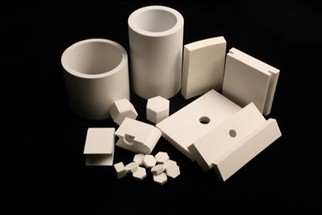
Our 3-in-1 ceramic rubber engineered wear liner impact plates modules provide maximum protection for extreme mining and dry bulk port applications, pairing high-purity alumina ceramic blocks with a chemically resistant elastomeric matrix engineered to isolate chute structures from coastal moisture and mechanical shock.
3.1. High-Density Sintered Alumina Ceramic Matrix
ANDA's high-purity (92% and 95% Al2O3) ceramic tiles deliver diamond-grade surface hardness (≥ 85 HRA) that resists severe micro-cutting abrasion from moist mineral ores. Sintered at temperatures exceeding 1650°C, the non-porous ceramic structure is completely inert to marine saltwater, acidic runoff, and chemical oxidation, ensuring smooth material flow without surface pitting.
3.2. Dynamic Energy Dissipation and Salt-Lock Vulcanization
The underlying hot-vulcanized rubber backing acts as an energy-absorbing spring, absorbing dynamic kinetic shock loads from falling ore drops up to 6 meters. Furthermore, the seamless vulcanization process seals the underlying Q235 steel backing plate from salt-air ingress, preventing sub-surface rusting and bond failure.
4. Minimizing Vessel Demurrage with Bolted Modular Liners
In international port logistics, vessel turnaround efficiency directly impacts demurrage costs. Maintenance teams require rapid, dependable lining solutions that can be serviced during brief weather windows or scheduled vessel changeovers:
- Hot-Work-Free Installation: Modular panels equipped with factory-welded Grade 8.8 stud bolts allow fast, mechanical drop-in installation without needing hot-work permits in dusty or wet unloader environments.
- Precision CNC Tolerances: Bolt-pitch dimensions held to ±0.5 mm tolerances ensure drop-in replacement across complex, multi-angled ship unloader transition chutes and hopper walls.
- Targeted High-Wear Replacement: Modular grid configurations enable terminal maintenance crews to replace only the high-impact center panels along the material trajectory, reducing material waste and maintenance labor.
5. Performance Analysis: Coastal Ship Unloader Liners
| Operating Parameter | Conventional AR500 Steel Plates | Standard Polyurethane Liners | ANDA Composite Ceramic Liners |
|---|---|---|---|
| Wet Slurry & Salt Corrosion Resistance | Poor (Rapid surface oxidation & pitting) | Moderate (Prone to hydrolytic degradation) | Total Immunity (Chemically inert ceramic face) |
| High-Drop Kinetic Shock Damping | Low (Transmits impact direct to chute frame) | Moderate (Tears under heavy, sharp ore drops) | Superior (Elastomeric dampening prevents tile fracture) |
| Average Service Life in Unloader Transitions | 3 to 6 Months | 4 to 8 Months | 24 to 36+ Months |
| Flowability of Wet/Sticky Ores | Poor (Roughens rapidly, causing build-up) | Moderate | Excellent (Maintains low friction coefficient) |
Custom Wear Solutions for Port Terminals | Shandong ANDA Industrial Co., Ltd.
Shandong ANDA Industrial Co., Ltd. manufactures specialized Ceramic Wear Solutions for Chutes, marine unloader hopper liners, and conveyor pulley lagging engineered to maintain continuous dry bulk throughput under extreme environmental conditions.
Headquarters: Shiji Center, Liuquan Rd, Zhangdian Dis, Zibo, Shandong Province, China
Marine & Port Inquiries: yulei@andaindustrial.com
Tel / WhatsApp: +86 18753386785
Official B2B Web Portal: www.andaindustrial.com