How Environmental Regulations Are Driving Upgrades in Mining Water Treatment | ANDA Industrial
How Environmental Regulations Are Driving Upgrades in Mining Water Treatment
The global regulatory landscape for mineral processing has reached a critical tipping point. In 2026, environmental protection agencies worldwide are enforcing strict zero-liquid discharge (ZLD) mandates and heavily penalizing legacy wet tailings dams. Recent industry statistics indicate that non-compliance penalties, paired with surging raw water procurement fees, have driven up total environmental overheads by 35% to 45% over the past three years. For modern plant managers, water management is no longer just an environmental metric-it is a core factor in corporate survival.
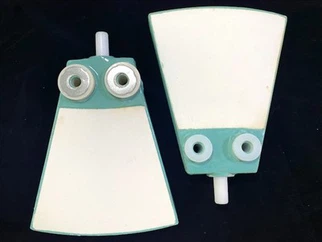
To navigate these strict compliance frameworks and avoid operational shutdowns, modern mining facilities are swiftly revamping their internal separation loops. High-tonnage operations are aggressively phasing out outdated, high-emissions dewatering methods. Instead, they are adopting automated vacuum ceramic disc filter technologies, relying heavily on advanced ceramic filter plates to secure water recovery and achieve structural dry stacking compliance right at the source.
[ REGULATORY CRACKDOWN ] Global Zero-Discharge Mandates + High Wet Tailings Dam Liabilities
│
▼
[ PROCESS UPGRADE ] Transition to High-Performance Disc Filter Systems
│
▼
[ COMPLIANCE REWARD ] Instant <20 mg/L Suspended Solids Water Reuse + Low-OPEX Dry Tailings Stacking
For an in-depth operational blueprint on balancing slurry chemical rheology, minimizing vacuum pressure drops, and scaling up throughput tonnage under extreme environmental constraints, explore our authoritative pillar guide: The Complete Guide to Ceramic Filter Plates in Mining Filtration: Engineering, Optimization, and Global Trends.
1. The Cost of Outdated Equipment: Why Fabric Filtration Fails Under Modern Audits
Under modern environmental audits, the quality of recycled water and the stability of discharged cake solids are heavily scrutinized. Legacy textile-based filter cloths are proving inadequate for handling the ultra-fine mineral slimes generated by advanced grinding circuits.
Because fabric filters possess flexible, inconsistent pore dimensions, fine clay fractions easily pass through or become trapped inside the cloth weave. This deep-bed particle blinding causes water recovery rates to plummet, forcing operators to exhaust extra energy running massive air compressors. Furthermore, the short operational lifespan of fabric-frequently tearing or blinding within 100 to 300 operating hours-results in chronic maintenance shutdowns, high labor costs, and elevated risks of slurry leakage that can trigger regulatory fines.
The detailed financial comparison, durability metrics, and operational trade-offs between rigid and flexible media are fully mapped out in our material review: Ceramic Filter Plates vs Filter Cloth: Which Is Better for Mining Filtration?.
2. Technical Mechanisms: Meeting ZLD Mandates Through Capillary Fluid Dynamics
Advanced ceramic filter plates (often referred to as a ceramic filters disc) allow modern plants to comfortably clear environmental hurdles by utilizing the physics of capillary action paired with subsurface vacuum extraction, rather than relying on brute force compression.
Sub-Micron Surface Separation
High-grade alumina plates feature a specialized asymmetric layout: an engineered outer membrane layer with highly uniform pore matrices ($0.5 \sim 2.0\,\mu\text{m}$) bonded to a highly permeable macro-porous substrate. This acts as a definitive surface barrier, isolating sub-micron mineral slimes on the outside while allowing process water to pass through freely.
The Gas-Barrier Power Saving
When the wetted ceramic disk rotates into the slurry basin, intense capillary tension is generated within the micropores. Combined with an internal vacuum pressure of $-0.09 \sim -0.098\,\text{MPa}$, fluid is drawn instantly through the substrate.
Crucially, because the capillary breakthrough pressure of these water-filled micropores is significantly higher than the vacuum pressure, air cannot bypass the ceramic membrane. The pores remain sealed against gas leakage, allowing the vacuum pumps to operate with minimal power draw. This cuts system energy consumption by up to 80% to 85% compared to cloth-press alternatives, significantly lowering carbon footprints.
Zibo's Single-Body Water Casting Innovation
To withstand the continuous operational stresses of large-scale mining filtration, modern plates are manufactured via the advanced Water Casting Process within Zibo's premier industrial ceramic cluster. By employing single-body molding and single-body integrated sintering, water-casting creates a robust internal network where 80% of the entire plate volume consists of active water channels. This maximizes hydraulic throughput, minimizes flow resistance, and prevents internal delamination during high-pressure backwashing cycles.
3. Strategic Advantages for Compliance and Resource Recovery
Deploying advanced ceramic vacuum filters across a plant's mining water treatment circuit provides decisive benefits for meeting both corporate and environmental goals:
- Ultra-Clear Filtrate Recovery (SS < 20mg/L): The sub-micron surface membrane keeps total suspended solids exceptionally low. The recovered water bypasses secondary thickeners and clarifies instantly, feeding directly back into grinding and flotation circuits to enable a true closed-loop process.
- Instant Dry Tailings Stacking: The system consistently delivers low cake moistures (8% - 12%) across copper, iron, gold, and lead-zinc tailing matrices. The discharged cake achieves immediate shear stability, allowing for safe mechanical conveyance and dry stacking without chemical stabilizers.
- Universal Fleet Retrofitting: Sourced replacement plates are engineered to precise physical tolerances, enabling them to serve as high-performance aftermarket parts for major international filter brands like Roxia and CEC, eliminating vendor lock-in.
4. Achieving Long-Term Operational Viability: The Sustainability Matrix
As global environmental frameworks tighten, selecting durable, energy-efficient filtration components is critical for protecting a mine's operating margins (OPEX). Sourcing engineered alumina or silicon carbide ceramic filter plates provides a reliable path toward lower maintenance costs, predictable throughput, and stable environmental compliance.
| Environmental & Cost Factor | Traditional Cloth Media | ANDA Water-Cast Ceramic Plates |
|---|---|---|
| Regulatory Carbon Footprint | High (Continuous compressor load; 10 - 15 kWh/t) | Extremely Low (Gas-barrier design; 1.5- 3 kWh/t) |
| Water Recycling Efficiency | Poor (High solids leakage; requires secondary treatment) | Premium (SS < 20 mg/L); immediate direct reuse ready) |
| Tailings Dam Risk Mitigation | Inconsistent cake moisture complicates dry stacking | Stable (8% -12%) moisture provides immediate shear strength) |
| Industrial Lifespan Profile | High waste (Frequent textile replacement every few weeks) | Sustainable (3 to 5+ years of continuous operational life) |
Future-Proof Your Mining Infrastructure with ANDA Industrial Ceramics
Ready to align your mineral processing plant with zero-liquid discharge (ZLD) regulations while lowering your specific energy consumption by up to 80%? ANDA Industrial provides high-performance, water-cast ceramic filter plates built to handle abrasive high-tonnage mining matrices. Backed by our state-of-the-art multi-kiln manufacturing expansion, we guarantee consistent quality, rapid delivery times, and robust component longevity for your global operations.
Request detailed CAD drawings, specialized material formulations (Alumina vs. SiC), and precise compatibility charts for upgrading your Roxia or CEC filtration fleets:
Contact Our Engineers for Custom Ceramic Disc Filter Plate Quotes