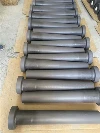
In modern mineral processing, filtration efficiency depends not only on system design but also on the internal structure of the filtration media itself. Among advanced dewatering technologies, alumina-based ceramic filter plates used in vacuum ceramic filter systems have become a core component in high-performance mining filtration applications.
To understand why these ceramic filters disc systems outperform conventional filtration materials, it is essential to examine the internal structure and engineering principles behind alumina ceramic membrane filter plates.
1. Multi-Layer Structural Design of Ceramic Filter Plates
Unlike traditional surface filtration materials, ceramic filter plates are designed with a multi-layer structure that integrates strength, permeability, and filtration precision.
A typical alumina ceramic membrane filter plate consists of:
1️⃣ Support Layer (Structural Backbone)
The base layer provides mechanical strength and compressive resistance. Manufactured through high-temperature sintering, this layer ensures the plate can withstand:
Continuous vacuum pressure
Rotational stress in disc filter systems
Abrasive mineral slurry impact
In large-scale vacuum ceramic filter operations used for mining slurry dewatering, structural stability is critical for maintaining long-term performance.
2️⃣ Intermediate Transition Layer
Between the support structure and the filtration surface lies a graded pore layer. This transition zone optimizes pore distribution and ensures smooth vacuum transmission across the plate.
The controlled pore gradient enhances:
Vacuum distribution uniformity
Capillary action efficiency
Flow stability during filtration cycles
This engineering design is one of the key reasons ceramic filtration technology delivers consistent performance in tailings dewatering applications.
3️⃣ Micro-Porous Membrane Layer (Functional Surface)
The top membrane layer is the functional filtration surface. It features precisely controlled micro-pores engineered to allow liquid passage while retaining fine mineral particles.
This micro-porous structure enables:
Fast cake formation
Low residual moisture
High filtration precision
Stable discharge behavior
In mining water treatment systems, this layer plays a vital role in improving water recovery rates and maintaining concentrate quality.
2. Pore Structure and Capillary Action Mechanism
The effectiveness of ceramic filter plates largely depends on their pore architecture.
Alumina ceramic membrane materials contain interconnected micro-channels formed during sintering. When integrated into a vacuum ceramic filter, these channels create strong capillary forces.
The mechanism works as follows:
Slurry contacts the ceramic filters disc surface.
Vacuum pressure pulls liquid into the micro-pores.
Capillary action enhances liquid extraction.
Solid particles accumulate to form a uniform cake.
Compared to conventional filtration media, this structure provides more predictable and repeatable dewatering performance.
For mining slurry dewatering operations handling iron ore, copper concentrate, or lithium minerals, this structural advantage significantly improves process stability.
3. Material Properties of Alumina in Mining Filtration
Alumina ceramic membrane filter plates are typically composed of high-purity Al₂O₃ materials. The material properties directly influence filtration reliability.
Key characteristics include:
High compressive strength
Excellent wear resistance
Strong chemical stability
Resistance to acidic and alkaline environments
These properties make ceramic filter plates suitable for harsh mining filtration environments where abrasive particles and chemical reagents are common.
In tailings dewatering systems, material durability ensures long service life even under continuous operation.
4. Internal Water Channel Design in Disc Filter Plates
Modern ceramic filters disc technology integrates optimized internal water channel structures.
Advanced designs may incorporate:
Multiple interconnected drainage channels
Uniform vacuum distribution pathways
Enhanced backwash flow routes
In vacuum ceramic filter equipment, this internal channel network ensures that each sector of the disc filter plates receives balanced suction pressure.
The result is:
Consistent cake thickness
Reduced localized clogging
Improved filtration cycle efficiency
This structural advantage is especially important in large mining water treatment installations operating 24/7.
5. Structural Impact on Tailings Dewatering Efficiency
In tailings dewatering projects, achieving lower moisture content improves:
Tailings stacking stability
Water recycling rates
Environmental compliance
The rigid and stable structure of alumina ceramic membrane filter plates prevents deformation under vacuum load, maintaining filtration accuracy throughout long operating cycles.
Because ceramic filtration relies on pore structure rather than fabric tension, performance remains stable even after extended usage.
6. Why Structural Engineering Matters in Vacuum Ceramic Filter Systems
The efficiency of a vacuum ceramic filter is directly linked to the quality and structure of its ceramic filter plates.
A well-engineered structure provides:
Higher filtration efficiency
Lower energy consumption
Reduced maintenance frequency
Longer operational lifespan
As mining projects expand globally and sustainability standards tighten, selecting advanced ceramic filters disc systems with optimized internal structures is becoming a strategic decision for mining operators.
Conclusion
Understanding the structure of alumina ceramic membrane filter plates reveals why they have become a preferred solution in modern mining filtration and tailings dewatering systems.
Through a carefully engineered multi-layer design, controlled pore architecture, and optimized internal water channel distribution, ceramic filter plates enable:
Efficient mining slurry dewatering
Improved mining water treatment performance
Stable operation in vacuum ceramic filter systems
Long-term reliability in demanding mineral processing environments
As filtration technology continues to evolve, structural innovation in ceramic filtration will remain central to improving productivity, sustainability, and cost efficiency in global mining operations.
Onsite Validation: Ceramic Filter Sectors Performance in Brazil
Real-world feedback from a major iron ore processing plant in Brazil:
- Perfect Flatness: Manufactured via our advanced Water Casting Process (one-piece molding) and Overall Sintering Process, ensuring tight dimensional tolerances, zero warping, and a seamless airtight fit.
- Outperforming Competition: The onsite side-by-side comparison clearly demonstrates ANDA's superior capillary action, delivering faster dewatering speed and lower filter cake moisture than alternative market brands.
*Engineered with high-density 92% Alumina/Artificial Corundum to maximize your plant uptime.