
3-in-1 Ceramic Wear Plates & Bolted Modular Liners | Shandong Anda
3-in-1 Ceramic Wear Plates: Triple-Layer Integrated Impact & Wear System
In heavy industrial material handling, protecting equipment from combined high-velocity abrasive sliding and severe perpendicular structural impact is a constant operational challenge. While standard wear plates or thin liners resist minor sliding, they quickly crack, debond, or shear away when subjected to high-drop bulk mineral impacts, continuous large-lump ore flows, or intense pneumatic pressure environments.
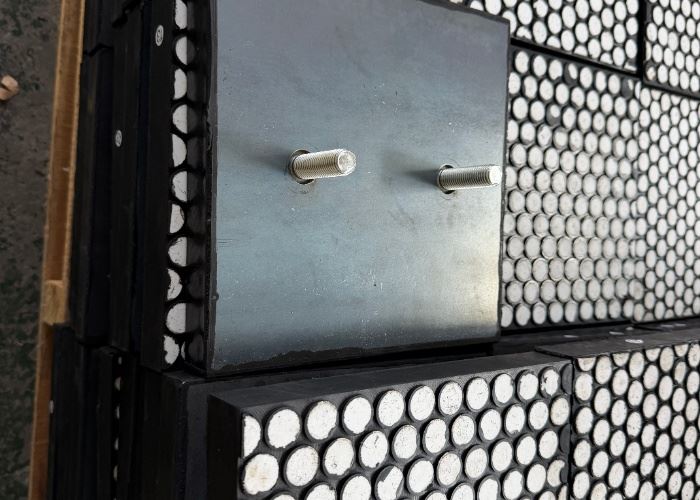
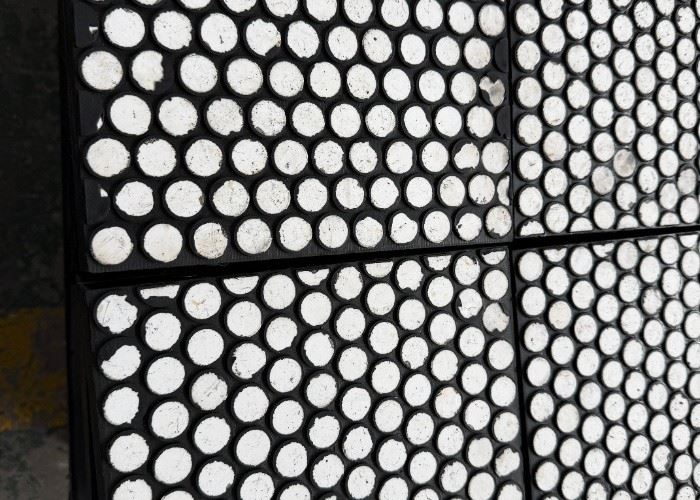
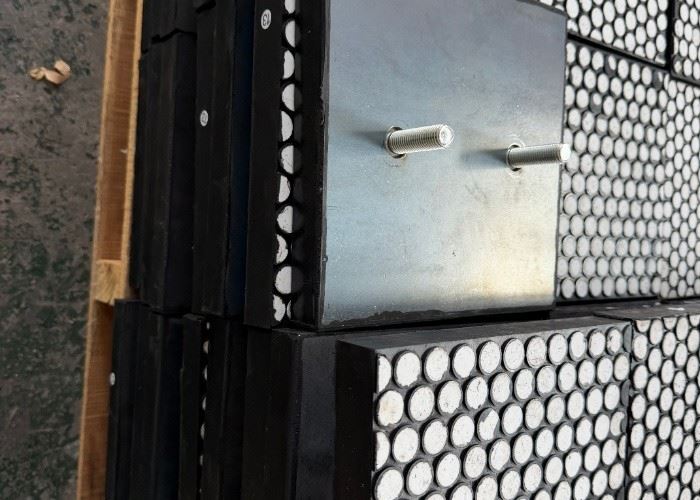
To eliminate early asset wear and reduce the cost of unexpected maintenance shutdowns, modern engineering firms are upgrading to high-performance heavy-duty composite infrastructure. The engineered 3-in-1 composite matrix combines the extreme surface hardness of technical ceramics, the shock-absorbing properties of viscoelastic vulcanized rubber, and the heavy structural rigidity of a carbon steel backing plate equipped with integrated mechanical studs. This dual mechanical and chemical bond creates a highly stable, drop-in asset protection system that handles the most demanding bulk conveyance setups.
1. Technical Engineering & Core Structural Principles
The field reliability of these advanced ceramic wear plates comes from their balanced triple-layer design. Single-material liners fail prematurely because they cannot handle different types of mechanical stress simultaneously. The 3-in-1 composite solves this limitation through integrated material layering:
[Coarse Ore Impact / Sliding Abrasion]  ──> Layer 1: High-Purity Ceramic Tile Matrix (Al2O3 / ZTA)
                                                   │
                                                   ▼ (Compressive Stress Transferred)
                                            Layer 2: High-Elasticity Cushioning Rubber Matrix
                                                   │
                                                   ▼ (Shear Strain Energy Dissipated)
[Bolted Structural Casing Support Frame] <── Layer 3: Carbon Steel Structural Backing Plate (Integrated Studs)
Layer 1: The Armor Matrix (Alumina or ZTA Technical Ceramics)
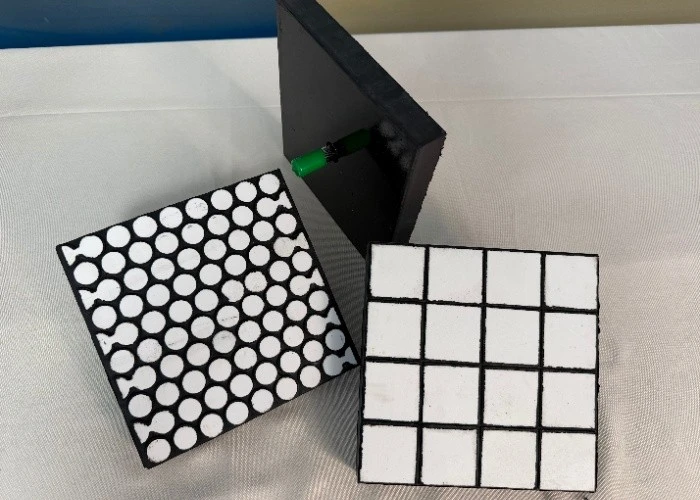
The primary wear-facing layer uses high-purity Alpha-Alumina (Al²O³ ≥ 92% or ≥ 95%) or Zirconia-Toughened Alumina (ZTA). Sintered at temperatures above 1700°C, this crystalline microstructure achieves a Rockwell hardness exceeding 85 HRA. For flat surfaces, weldable rectangular tiles with tapered countersunk holes allow direct plug welding through to the steel plate before the elastomer filling. This provides double retention against severe sliding forces and structural shifting.
Layer 2: The Shock Absorption Layer (High-Resilience Elastomer)
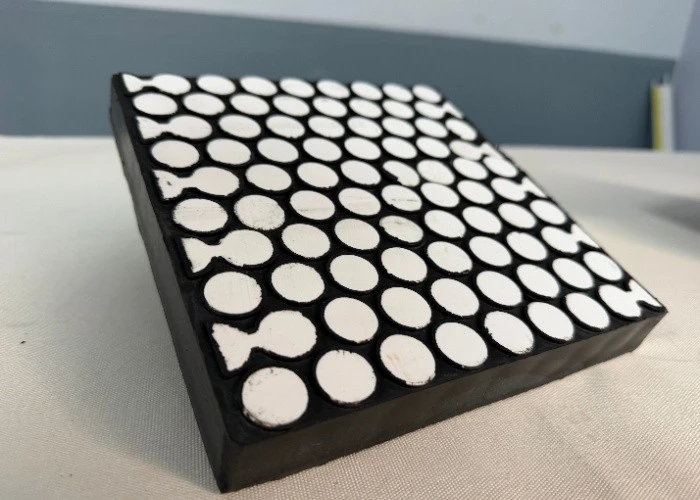
The ceramic components are vulcanized under high pressure directly into a modified natural rubber or SBR matrix. When large rocks strike the surface, the rubber acts as a shock absorber. It deforms under compression to distribute localized impact forces and eliminate brittle cracking across the ceramic faces. This layer also isolates acoustic vibrations, reducing structural noise by 10 to 15 dB.
Layer 3: The Rigid Base & Fastener Grid (Steel Backing Plate)
Unlike standard adhesive-bonded tile mats, a 3-in-1 liner utilizes an integrated structural steel plate (typically Q235 or Q355 carbon steel, 6mm to 10mm thick) as its base. Heavy-duty threaded studs are pre-welded onto the back of the plate before vulcanization. This creates robust bolted wear liners that fit directly into existing equipment frames, preventing the bond failures common with cold-bonded epoxies in high-vibration environments.
2. Cross-Sector Industrial Applications
The customizable structure of our ceramic wear tile - modular liners makes them an ideal choice across diverse heavy industrial settings where conventional alloy plates require frequent replacement.
Mining & Mineral Processing (Beneficiation Circuits)
Modern high-capacity crushing and grinding plants experience severe equipment wear. The 3-in-1 composite system is widely specified for:
- Primary and Secondary Crusher Chutes: Handling direct impact from large run-of-mine (ROM) ore blocks falling from heights over 3 meters.
- Vibratory Feeder Decks: Resisting continuous sliding abrasion from heavy iron ore, gold tailings, and copper concentrates.
- Transfer Hoppers and Diverter Gates: Providing impact protection in wet or dry material sorting areas where high material flow rates rapidly wear through standard hardfacing alloys.
Cement & Aggregate Manufacturing
Cement plants process highly abrasive raw materials that cause significant sliding wear and tool erosion.
- Raw Material Silo Cones and Discharge Spouts: Preventing material build-up while defending against sliding wear from limestone, shale, and gypsum.
- Clinker Storage Bins and Chutes: Withstanding high-temperature abrasion from clinker materials before finishing mill processing.
Steel & Iron Metallurgy Plants
Ironmaking facilities rely on heavy-duty wear systems to maintain continuous coke and sinter handling operations.
- Blast Furnace Material Charging Chutes: Resisting continuous impact and sliding abrasion from abrasive coke fractions and sinter ore mix.
- Sintering Plant Discharge End Hoods: Handling continuous high-angle sliding abrasion from highly abrasive hot sinter material.
3. Comparative Technical Material Performance Data Analysis
The following performance analysis contrasts standard carbon steel, chromium carbide overlay (CCO) plates, and Shandong Anda's heavy-duty 3-in-1 ceramic-rubber-steel composite systems:
| Technical Parameter Matrix | Standard Carbon Steel (Q235/Q355) | Chromium Carbide Overlay (CCO) | Anda 3-in-1 Alumina Wear Plate | Anda 3-in-1 ZTA Premium Liner |
|---|---|---|---|---|
| Surface Mineral Hardness | 4.0 - 5.0 Mohs | 6.5 - 7.0 Mohs | 9.0 Mohs | 9.0 Mohs |
| Rockwell Hardness (HRA) | ≤ 50 HRA | 58 - 62 HRC | ≥ 85 HRA | ≥ 90 HRA |
| Fracture Toughness (K&sub1;&subc;) | High (Ductile) | Low (Brittle Alloy) | 4.5 - 5.2 MPa·m¹⁄² | 7.0 - 8.5 MPa·m¹⁄² |
| Fixing Mechanism Stability | Direct Welding / Bolted | Direct Welding Only | Mechanical Studs / Bolted | Mechanical Studs / Bolted |
| Severe Impact Resistance | Moderate (Deforms Easily) | Poor (Surface Cracking) | Excellent (Rubber Absorbed) | Maximum Heavy Impact Deflection |
| Relative Wear Life Lifecycle Factor | 1.0 (Baseline Factor) | 2.5 - 3.0× Base | 5 - 8× Baseline Life | 10 - 15× Extended Lifespan |
4. Proven Performance: Real-World Field Case Study
Project Setting: Iron Ore Processing Facility (High-Capacity Wet Flotation Circuit)
Operational Challenge: A primary transfer chute handling an aggressive slurry flow of run-of-mine iron ore (particle size ≤ 150mm, drop height 3.5 meters) suffered rapid wear. Standard 20mm hardfaced chromium carbide alloy plates were wearing through every 2.5 months. This frequent failure required regular patch welding, caused significant material loss, and resulted in over 80 hours of unscheduled maintenance downtime annually.
Engineered Solution: Our technical division assessed the system parameters and implemented a custom-designed **3-in-1 ceramic wear tile system**. The solution utilized a modular layout of 50mm thick panels consisting of 30mm thick Zirconia-Toughened Alumina (ZTA) cylindrical plugs, vulcanized into a 12mm premium natural rubber layer, and backed by an 8mm carbon steel plate secured with M16 integrated studs.
Field Performance Audit Post Installation:
Conventional CCO Liner: [2.5 Months Lifespan] ──> 4.8 Shutdowns/Year for Complete Swaps
Anda 3-in-1 ZTA System: [22 Months Continuous Run] ──> Zero Failures; 75% Reduction in Maintenance Costs
Operational Results: The modular panels completed 22 months of continuous operation before requiring a partial replacement. The plant eliminated 4 scheduled wear-lining swaps per year, recorded zero unplanned equipment breakdowns, and achieved a 75% reduction in cumulative maintenance labor and hardware costs.
Request Custom Wear Protection System Engineering
Don't let predictable material failures and recurring replacement costs compromise your processing efficiency or lower your tonnage yields. Shandong Anda Industrial Co., Ltd. combines 15 years of heavy-industry export experience with strict quality management frameworks (ISO 9001) to custom manufacture wear protection components tailored precisely to your site's specific CAD drawings and operational conditions.
1. Need a System Durability Assessment?Submit your material processing flow rate, drop velocity, and current liner replacement schedules. Our technical technicians will deliver a comprehensive wear-life evaluation report. Request Wear Analysis → |
2. Need a Custom Modular Layout?Provide your transfer chute or hopper CAD drawings. Our design division will supply custom wear liner impact plates modules blueprints tailored to your site conditions. Get Custom Ceramic Liner Design → |
Send Inquiry
Hot Tags: 3-in-1 ceramic rubber steel composite wear liners, China, suppliers, manufacturers, factory, customized, price, ceramic rubber lining, Rubber Ceramic Liner